
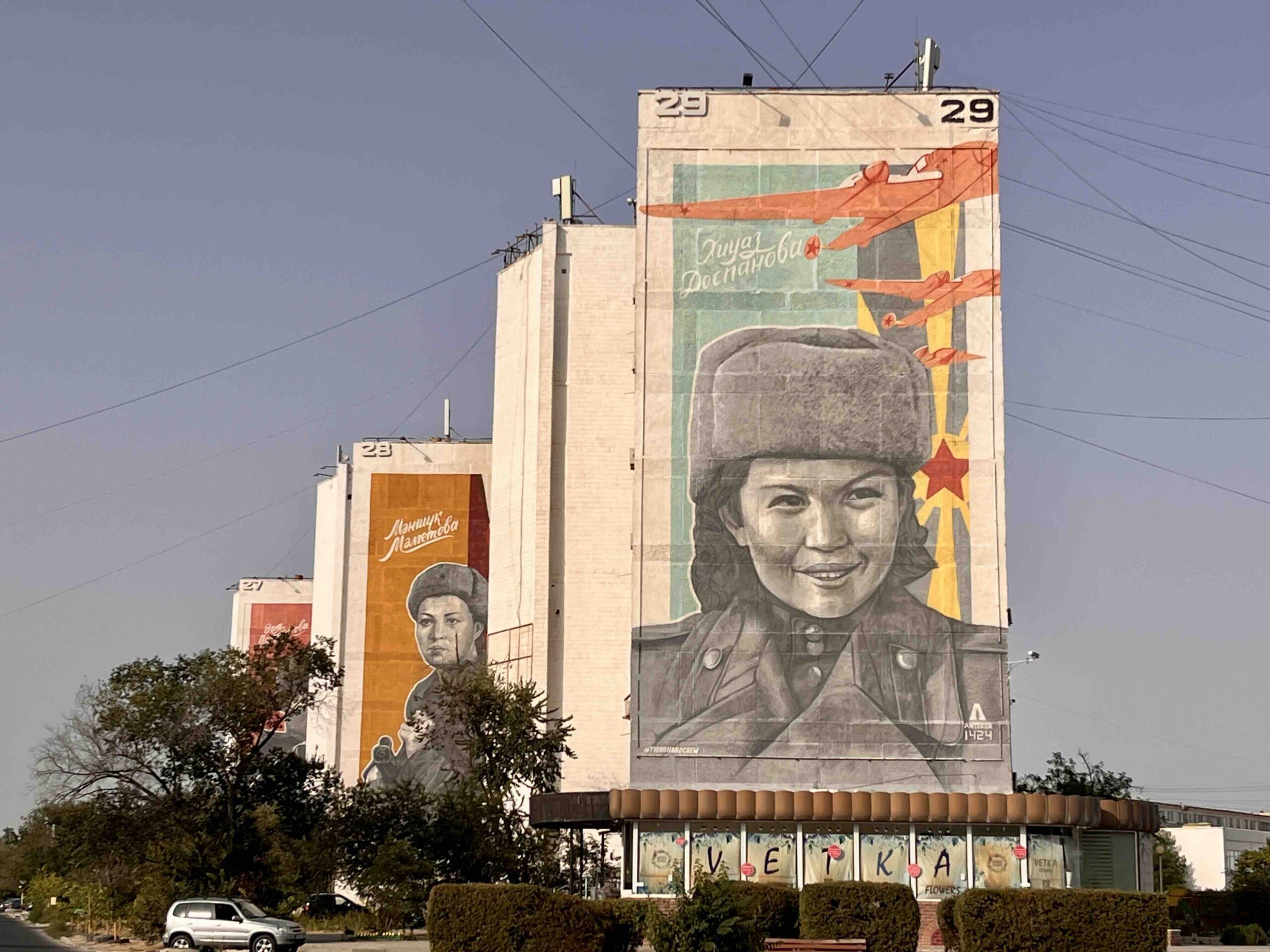
Most people have never heard of Aktau. And that’s exactly why it’s worth going. This port city on the eastern shore of the Caspian Sea in western Kazakhstan is one of Central Asia’s most unusual travel destinations: a Soviet-era nuclear city built in the middle of a desert. With no street names, no natural freshwater, and a wide promenade that comes alive late evening when the summer heat finally relents. I arrived by the legendary Caspian Sea ferry from Baku — a journey covered in my previous post — and spent several days exploring a place that rewards the curious traveller with layers of strange history, warm hospitality, and scenery unlike anything else on the Silk Road. Here’s everything you need to know about visiting Aktau, Kazakhstan in 2026.
A City That Shouldn’t Exist
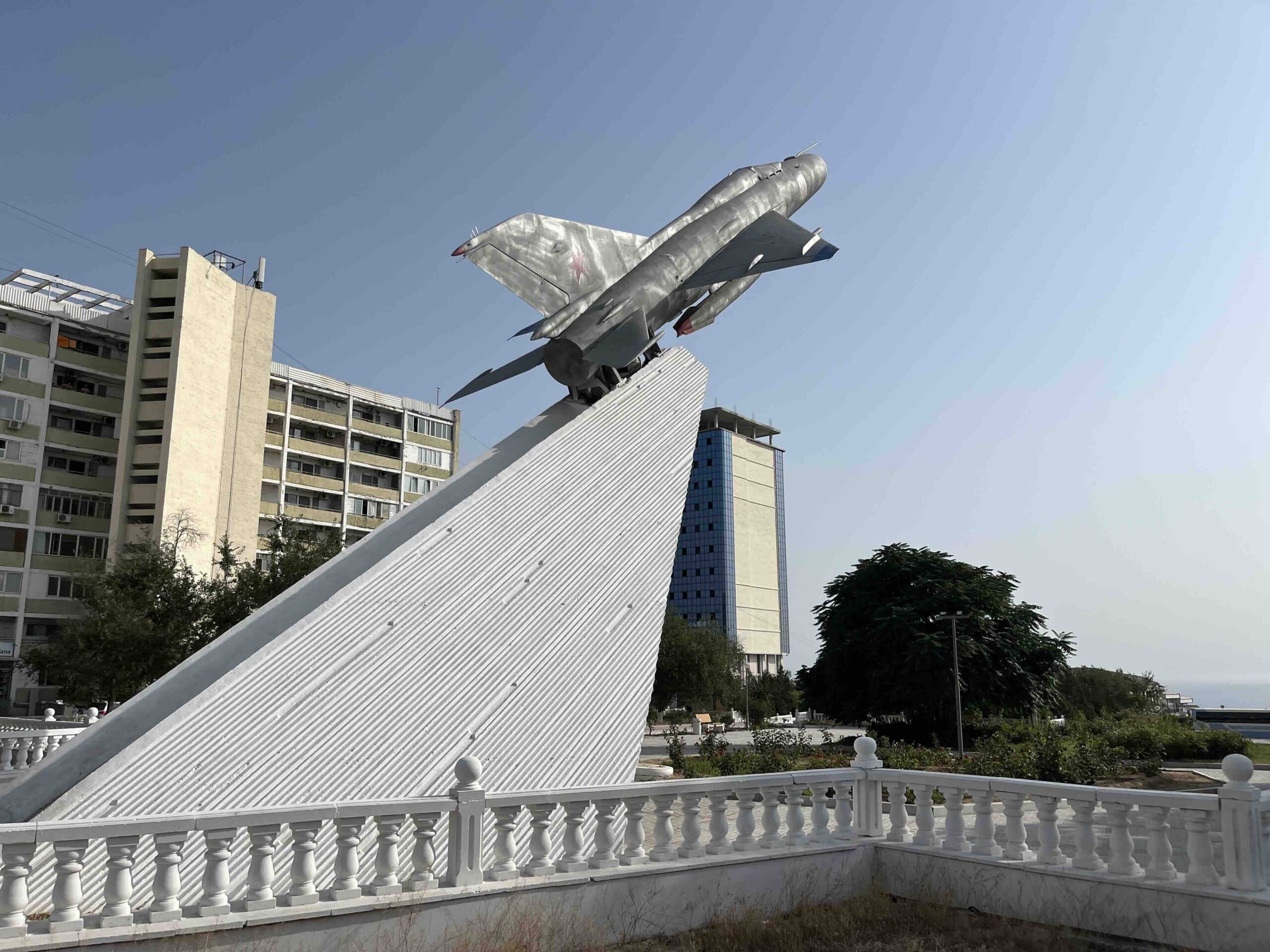
Aktau was born in 1961 as a Soviet secret. A closed uranium-mining settlement codenamed Guriyev-20, off maps and off limits. It was later renamed Shevchenko, after Ukrainian poet Taras Shevchenko, who had been exiled to this very region by the Tsar. There’s a certain Soviet irony in that: a secret nuclear city named after a man punished for writing too freely.
To survive in the desert, the city ran one of the world’s first fast-neutron reactors, which powered a desalination plant turning Caspian seawater into drinking water. Aktau still has no natural freshwater source, every drop from the tap has been pulled from the sea. When Kazakhstan gained independence in 1991, the city reclaimed its Kazakh name.
3 Quick Facts about Visiting Aktau
- There are no street names. The city is divided into numbered mikrorayons (microdistricts) and addresses are written as a string of numbers
- The most popular ride hailing app used in Kazakhstan is Yandex Go
- Kazakhstan uses the Kazakhstani Tenge (KZT) and card payments are widely accepted, even in small restaurants
Where to Stay in Aktau
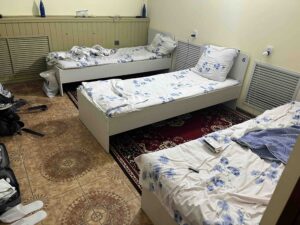
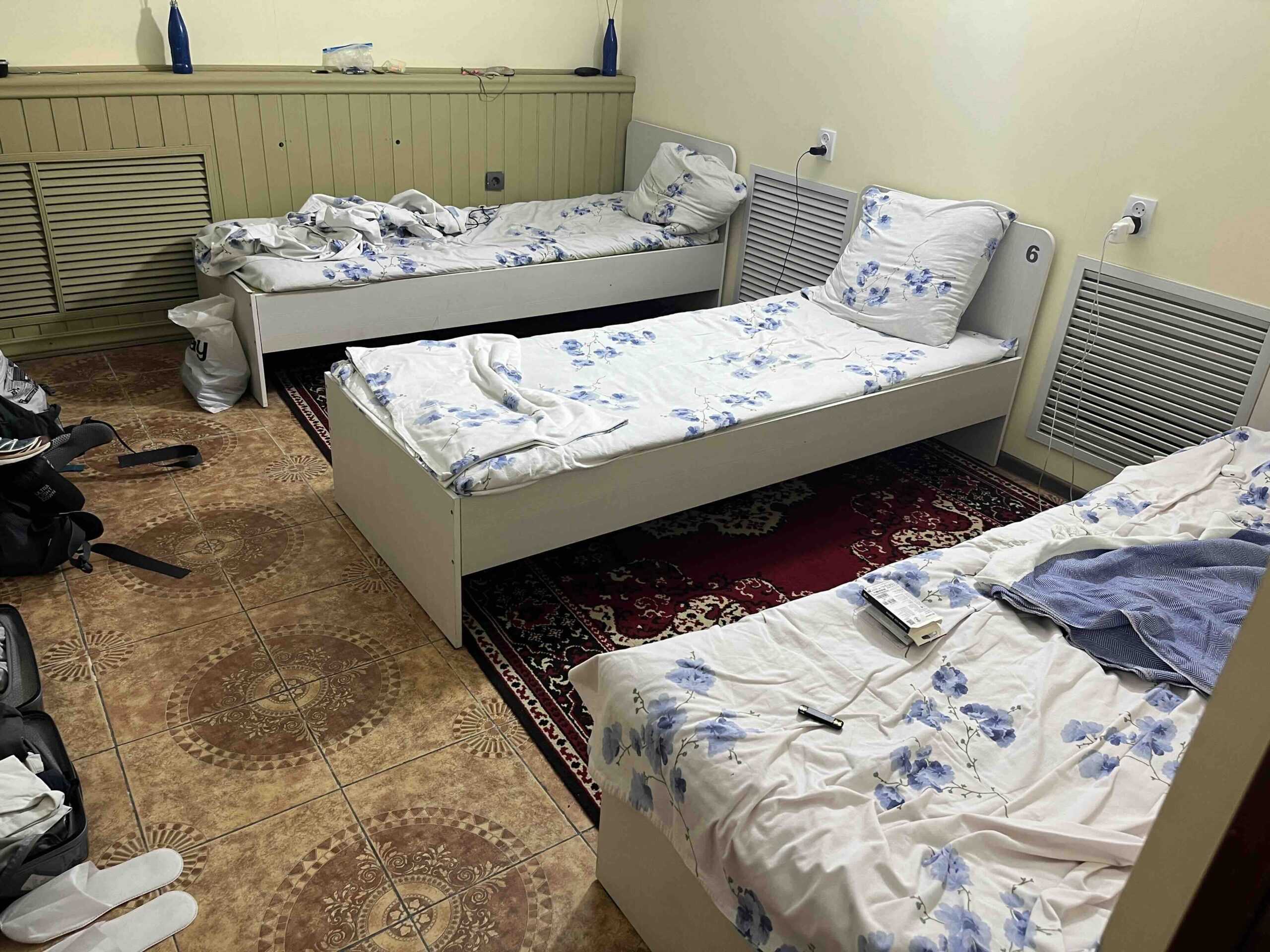
For budget travellers, Mango Hostel is one of the reliable options in Aktau. I stayed there and the setup is exactly what you’d expect from a Central Asian backpacker hostel: simple beds lined up dormitory-style in the basement. If you arrive early before check-in time or you want to leave after check-out time, be prepared to pay extra for it.
What hostels like Mango give you that no hotel can is information given by other travellers. The people you meet in a hostel in Aktau are certainly interesting with many stories to share. People crossing on the ferry from Azerbaijan or heading to the Uzbek border by train, overlanders piecing together the Silk Road in both directions. Over breakfast, you swap notes on routes, visas, ferry schedules, and which desert tours are worth booking. It’s a good base.
Getting Around Aktau
In Kazakhstan ride hailing is as popular as anywhere else. They just use another app that I personally did not know before: Yandex Go. It works great and it is affordable. I managed all my rides with Yandex Go.
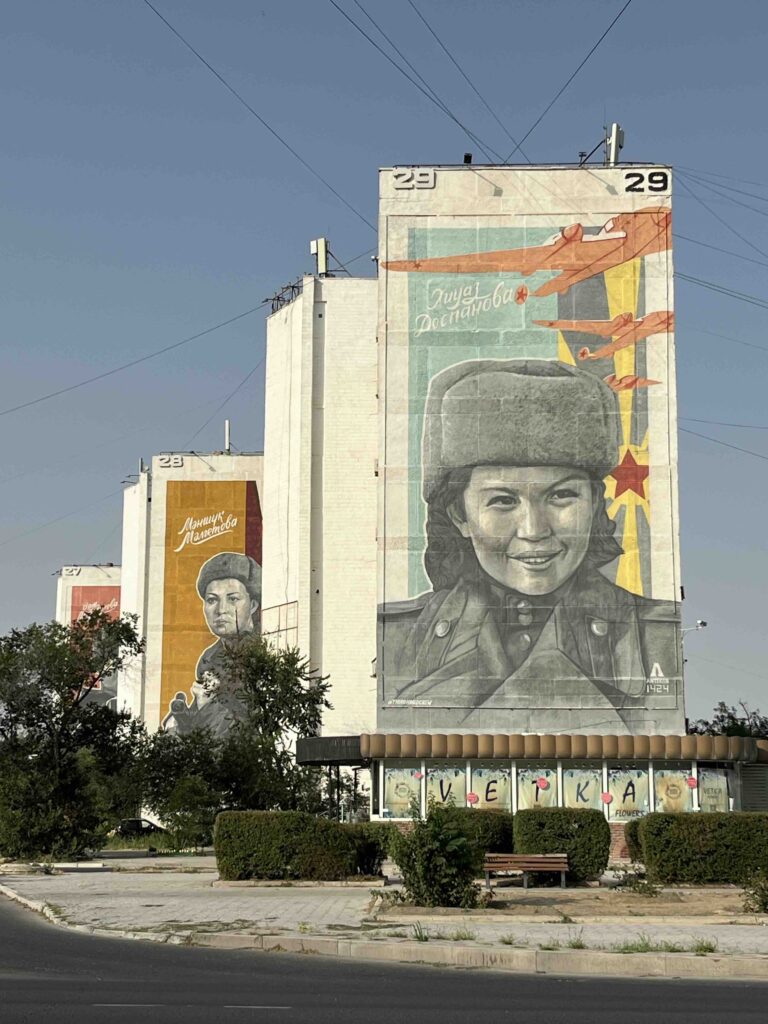
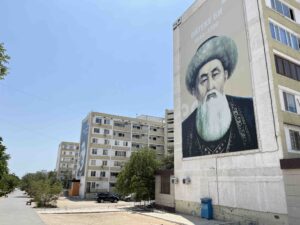
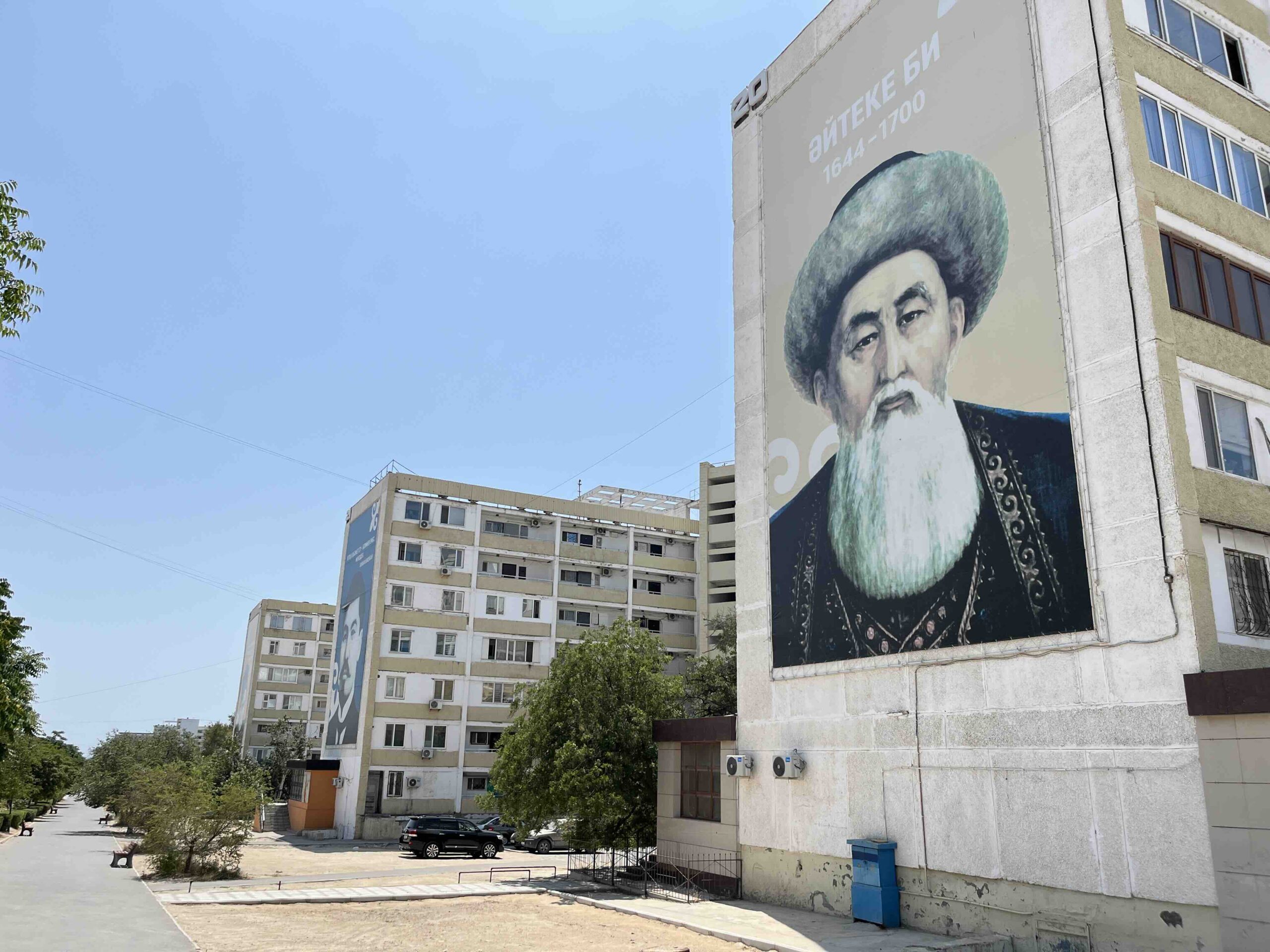
If you live centrally and you are good on foot, I highly recommend to walk as much as possible. You will naturally explore the streets and neighbourhoods. See remarkable murals on buildings. Or visit local supermarkets to check out what they sell that you might have never seen before.
Food and Coffee in Aktau
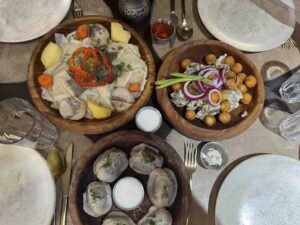
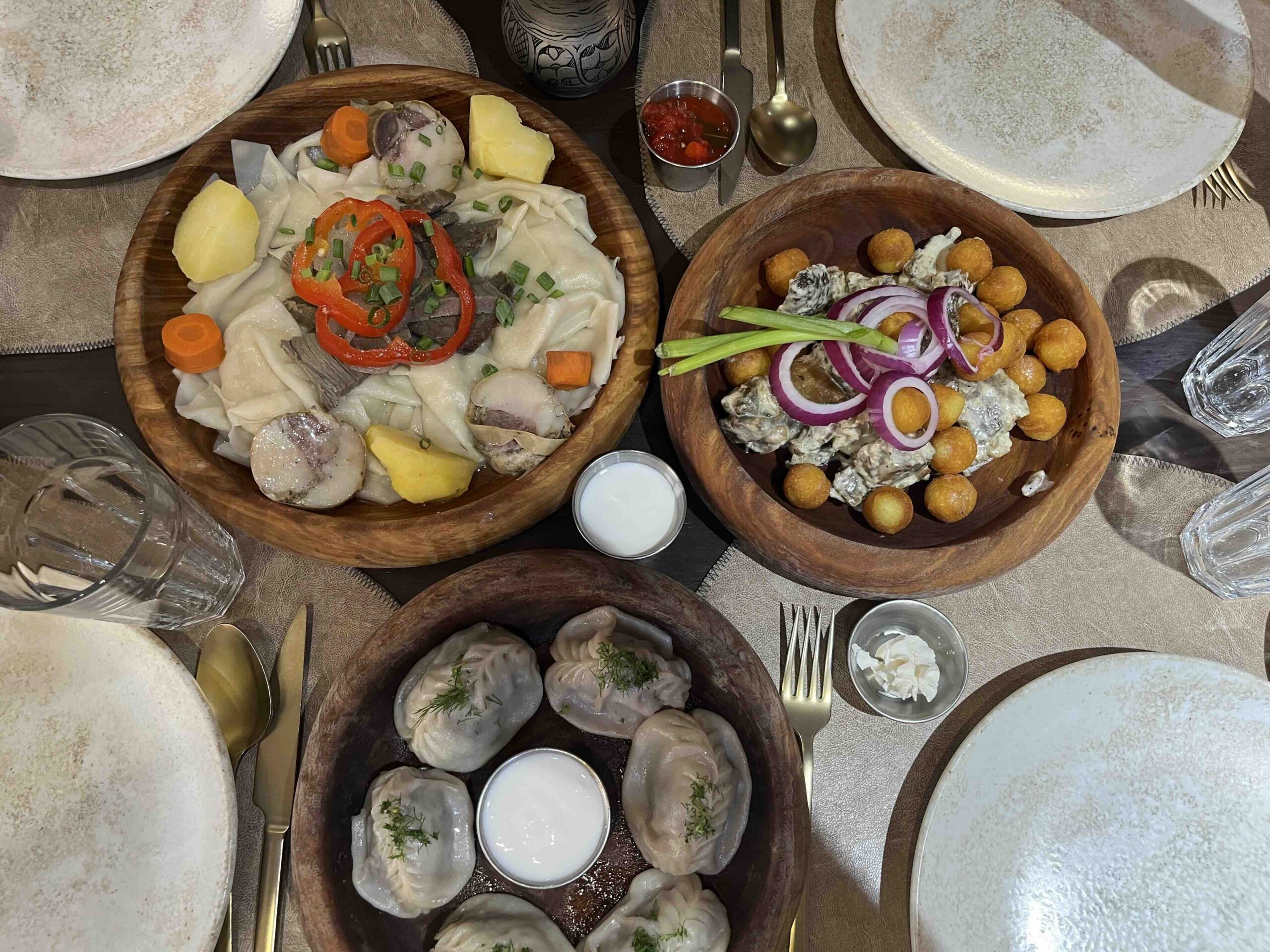
Kazakh cuisine is built for the steppe: hearty, meat-heavy, and deeply satisfying after a long day on the road. The cornerstone dish is beshbarmak, a generous plate of boiled horse or mutton, flat noodles, and onion broth (photo in the image gallery). Horse meat is central to Kazakh food culture, and you’ll find it everywhere, in sausages (kazy), in soups, and as the protein of choice at any proper traditional table. If you’ve never tried it, Aktau is a fine place to start.
For authentic Kazakh food in a setting that does justice to it, Bozjyra is an easy recommendation. The interior is warm and traditionally decorated — carved woodwork, textiles, dim lighting — and the portions are enormous. T
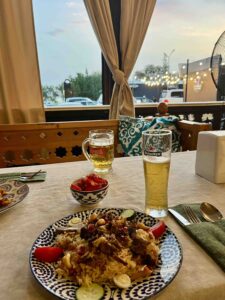
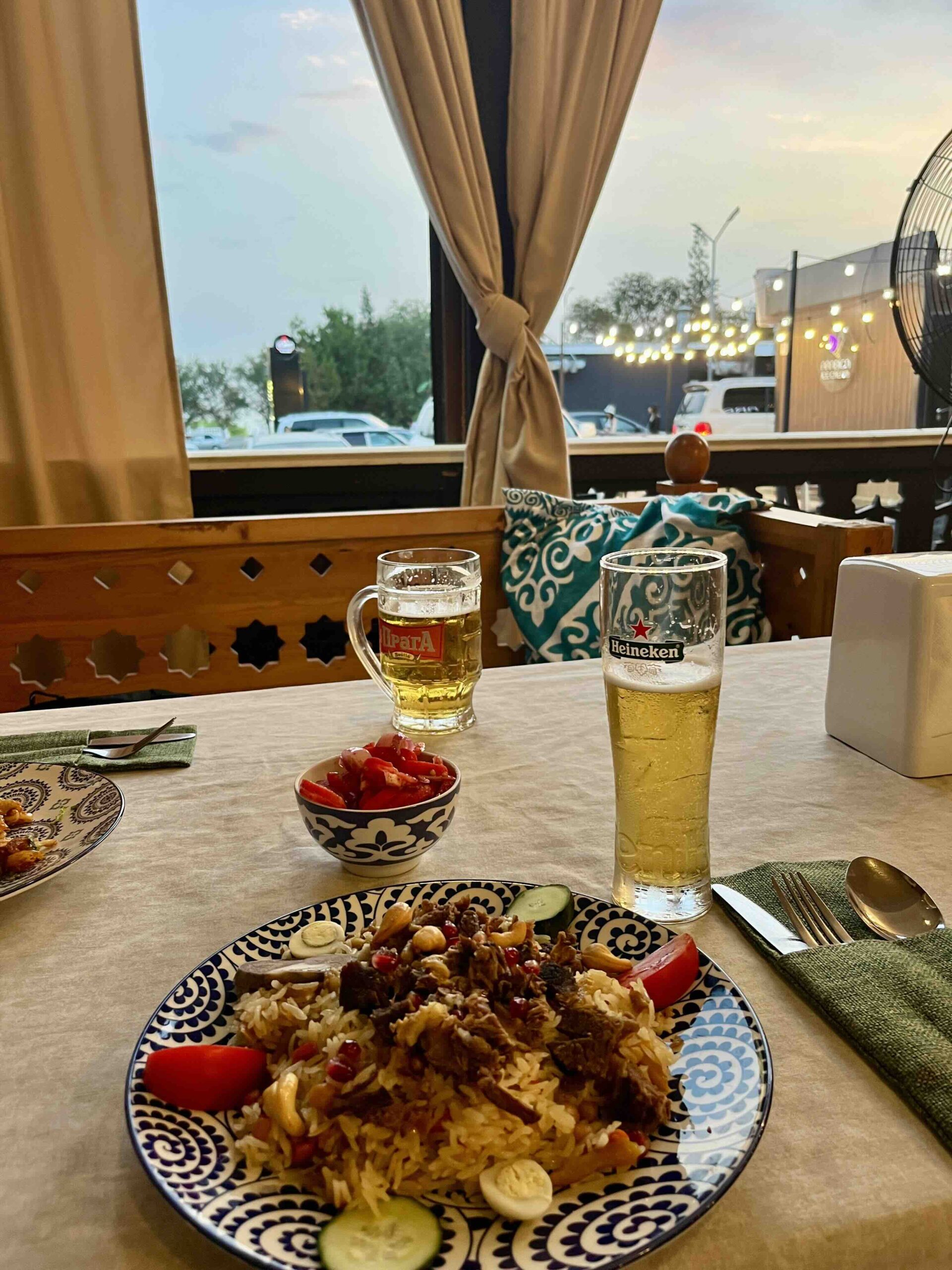
One evening I ended up at Khayet Restoran with a fellow traveller I’d met on the Caspian Sea Ferry. We ordered plov, Uzbek-style rice with lamb and carrots, and it was excellent: fragrant, rich, and cooked properly. Between us we had two mains, a dessert, two beers, two vodkas, and a bottle of water. The bill came to around €19. That’s not a typo.
What was equally memorable was the timing. We arrived at 8pm to an almost empty room. By 11pm, the place was packed. Couples, families with young children, groups of friends. Just another Aktau evening, the whole city running on its own nocturnal schedule while the rest of the world slept.
Plenty of cafés for your desired caffein intake
As for coffee Aktau surprised me here, too. Walking through the city during the day, with its wide Soviet boulevards and blocky apartment buildings, you wouldn’t necessarily expect a thriving café scene. But give it a chance. Close to Mango Hostel I stumbled across Mr. Пончик, a small, unpretentious café that quickly became my morning ritual. The flat white was good enough that I went back every day I was there. Wave Coffee is another solid option worth seeking out. Between the two, my mornings in Aktau were well taken care of.
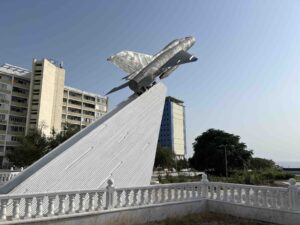
The Eternal Flame Memorial
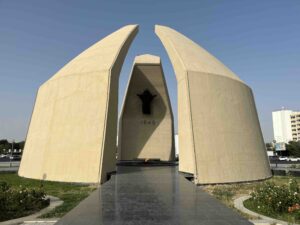
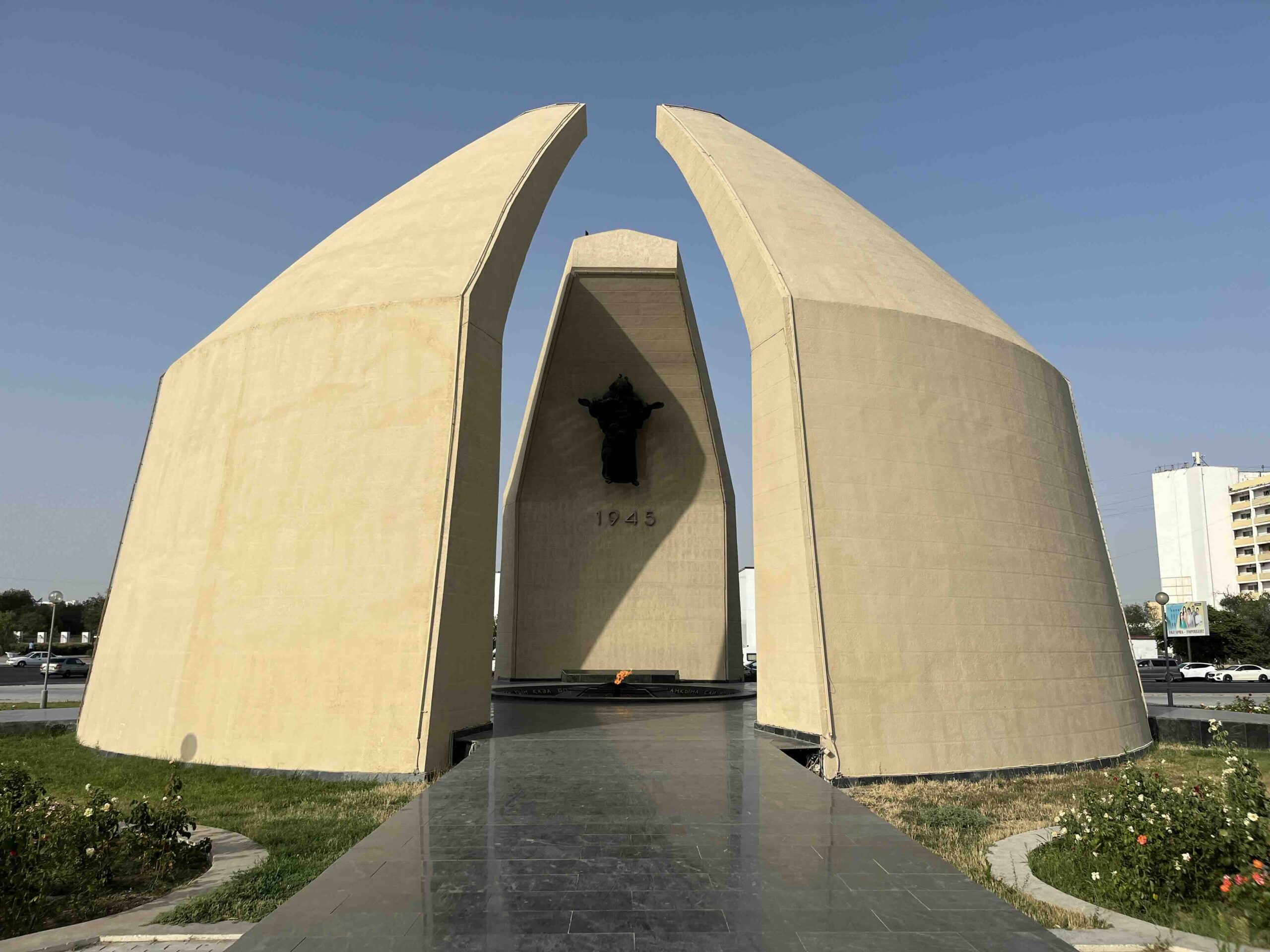
Near the city centre stands the World War II Eternal Flame Memorial. It’s one of those Soviet-era monuments that exist in virtually every city across the former USSR, yet somehow never feels entirely routine.
The Aktau version is built around an Asian-themed design, with a circle of pale arches shaped to evoke a traditional Kazakh yurt. At the centre, the eternal flame burns — as it has for decades — in memory of those who died in what Kazakhs still call the Great Patriotic War. Kazakhstan sent hundreds of thousands of men to the front between 1941 and 1945, and tens of thousands never returned.
Skal’naya Tropa: The Rock Trail
If there’s one thing to do in Aktau, it’s walking the Skal’naya Tropa.
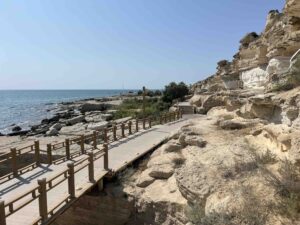
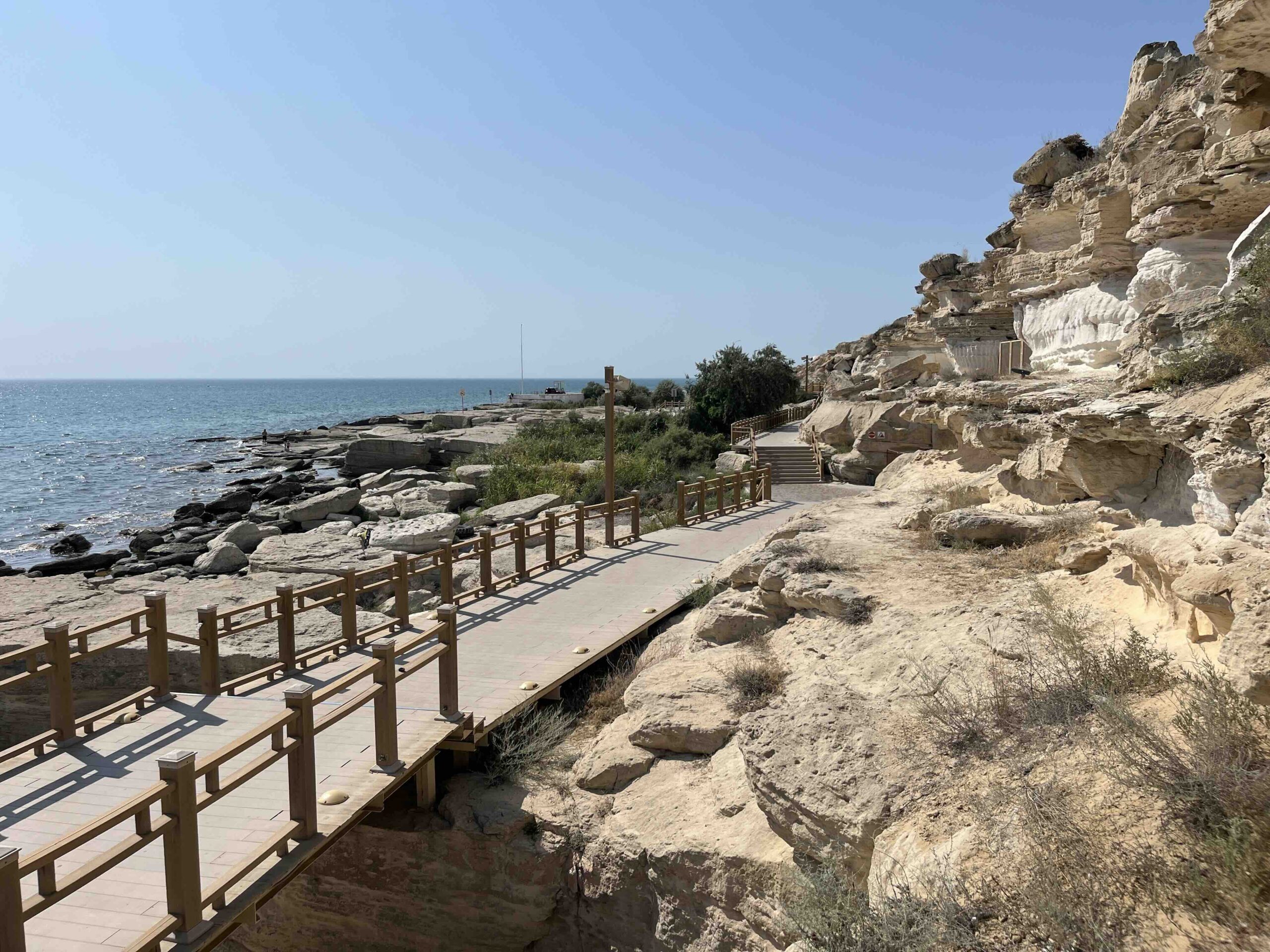
Skal’naya Tropa translates from Russian as “rocky path,” and that’s a fair description. The trail runs along the limestone clifftop for roughly 1.5 kilometres, between the 1st and 4th microdistricts, with the Caspian on one side and the city on the other. Before the path was built, this stretch of coastline was essentially inaccessible. The cliffs made it too difficult to navigate on foot. Workers built the entire promenade by hand, since construction vehicles couldn’t get close to the terrain
The result is one of Aktau’s most memorable spots. There are about 20 viewing platforms along the route, each giving you a different angle on the sea and the cliffs. After dark, the trail is lit up with coloured lights giving the path an oddly dreamlike atmosphere, especially with the sea crashing below in the darkness.
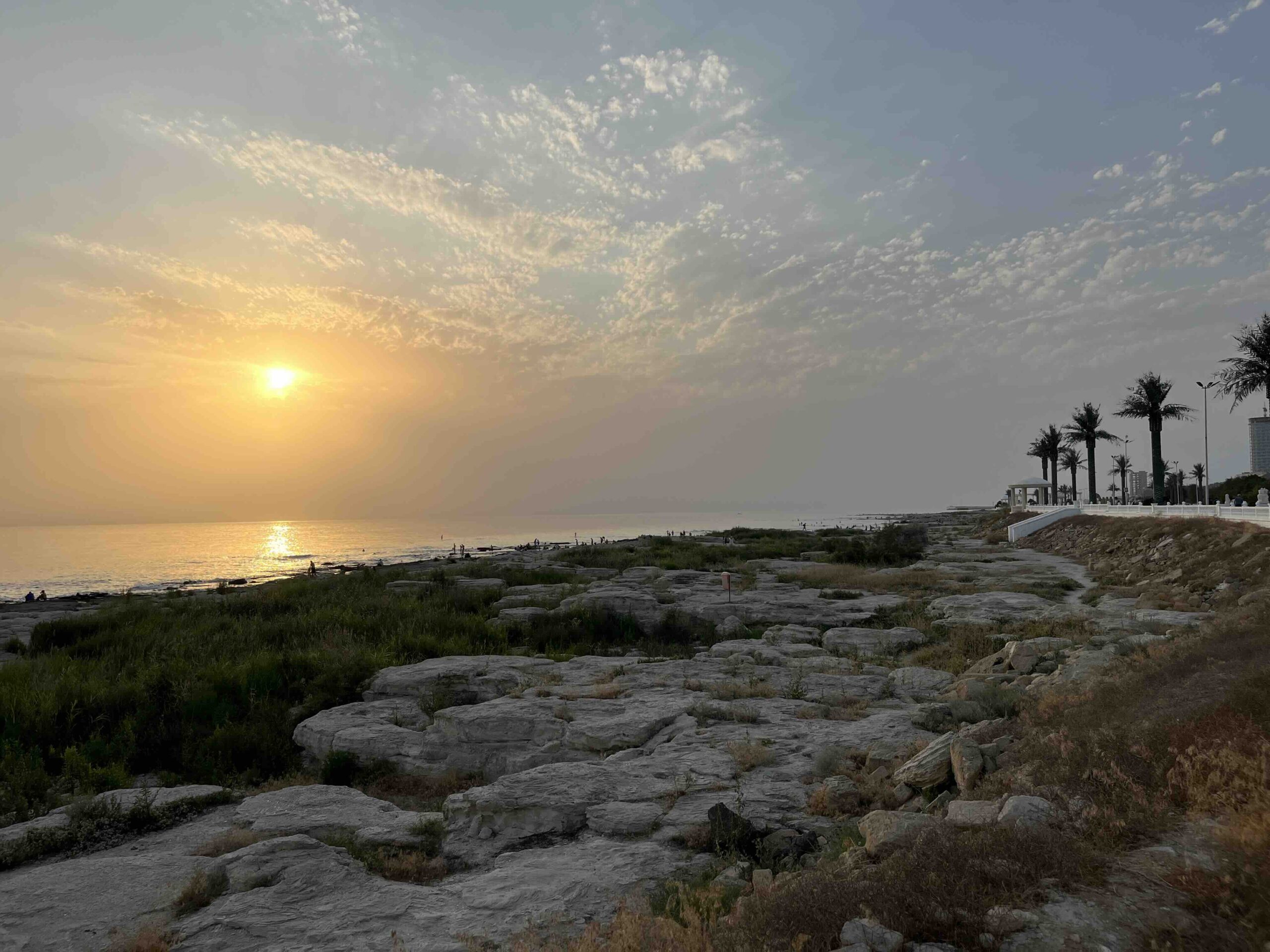
In Summer, walk it in the late evening. The heat has broken, the light is golden if you time it right.
What’s Next: The Night Train to Nukus
After a few days in Aktau, it was time to move on. The next leg of the journey was one of those routes that makes you feel excited many days before: an overnight train crossing the border into Uzbekistan and arriving in Nukus.
The train departs from Mangystau Station, about 20 kilometres outside the city centre, so factor that in. The ride takes roughly 20 hours. More in my next blog post.
Berlin to Singapore Overland
📍 Aktau, Kazakhstan
🛣️ Distance travelled since Berlin: 4,887 km
Aktau, Kazakhstan. A Hidden Gem at the Caspian Sea
Most people have never heard of Aktau. And that’s exactly why it’s worth going. This…
How to Take the Caspian Sea Ferry from Azerbaijan to Kazakhstan (Complete Guide)
Crossing the Caspian Sea by ferry from Azerbaijan to Kazakhstan sounds exciting and adventurous —…
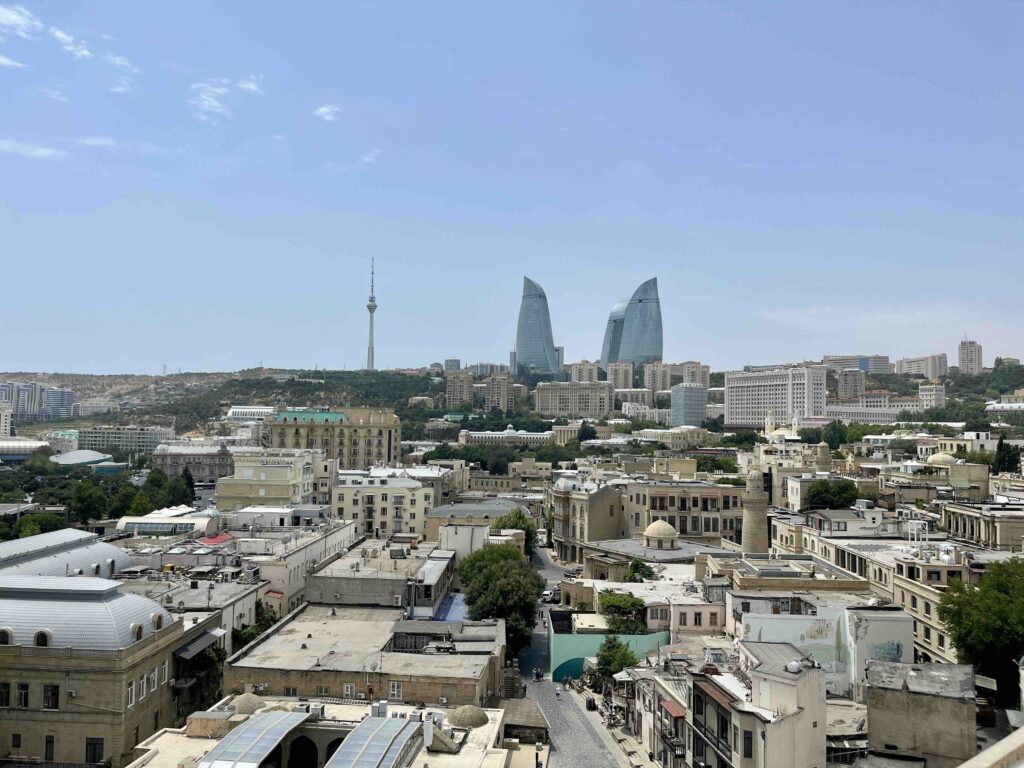
From Tbilisi to Baku: Continuing My Journey Through Azerbaijan — Against My Own Rules
Traveling from Tbilisi to Baku turned out to be one of the most emotionally difficult…
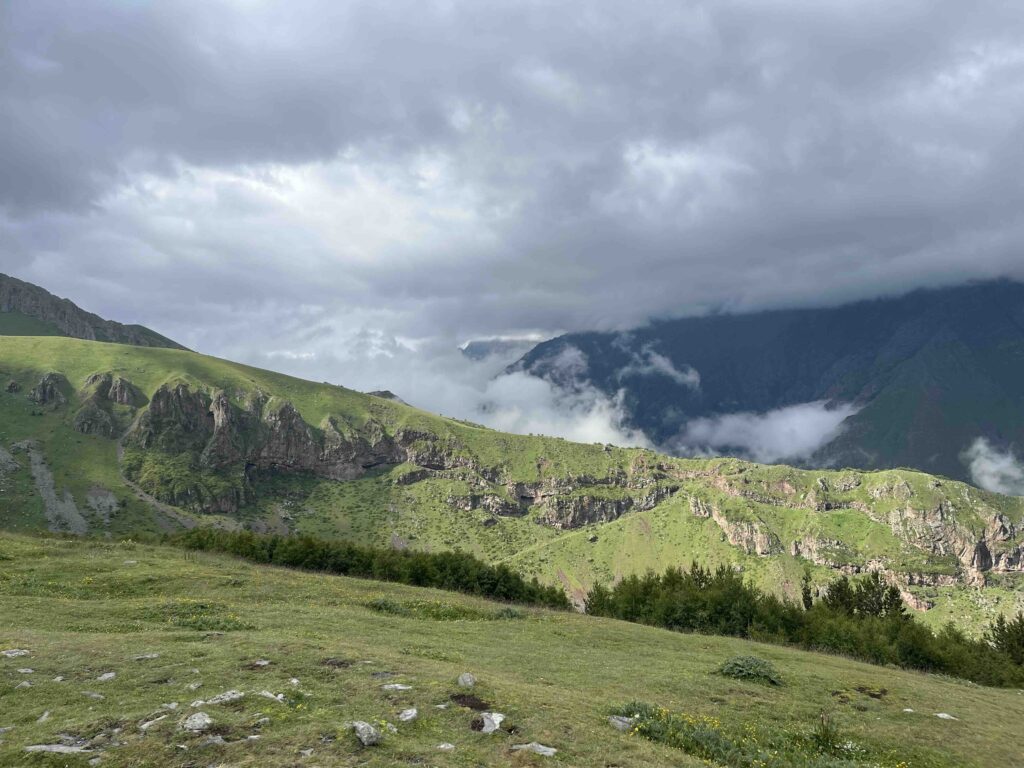
From Kars to Georgia: Overland to Tbilisi & Into the Caucasus Mountains
Crossing from Turkey into Georgia marked a quiet but meaningful shift in my overland journey…
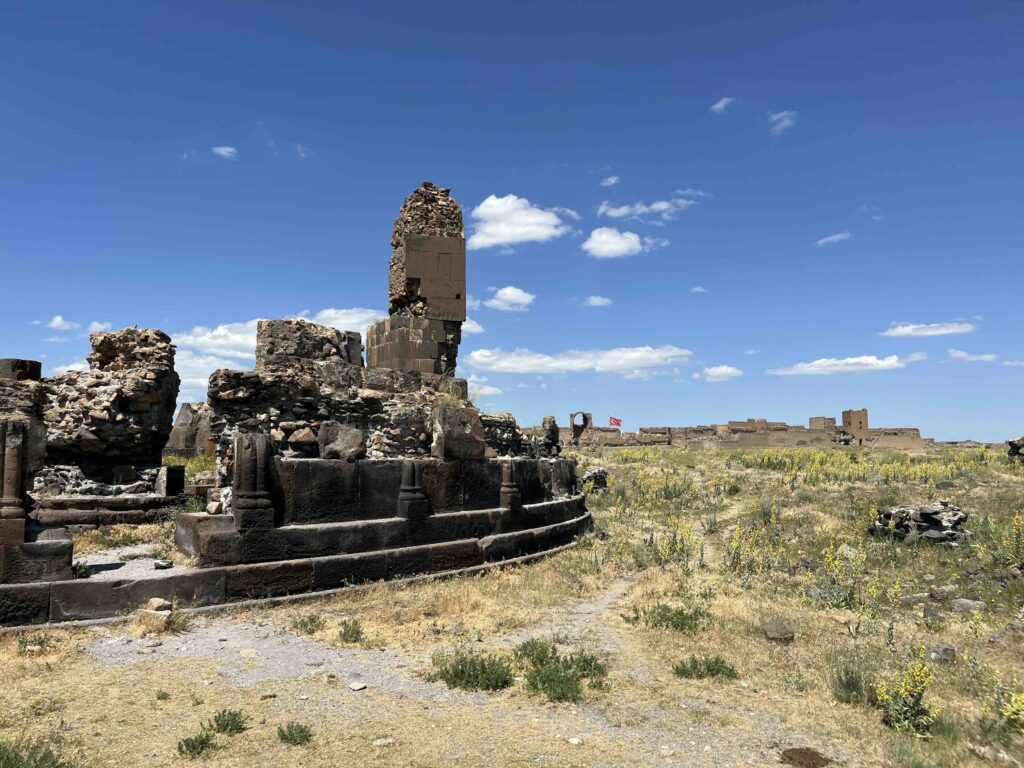
Ani, Turkey: Visiting the Ghost City on the Armenian Border
Hidden in the far east of Turkey, right on the border with Armenia, Ani is…
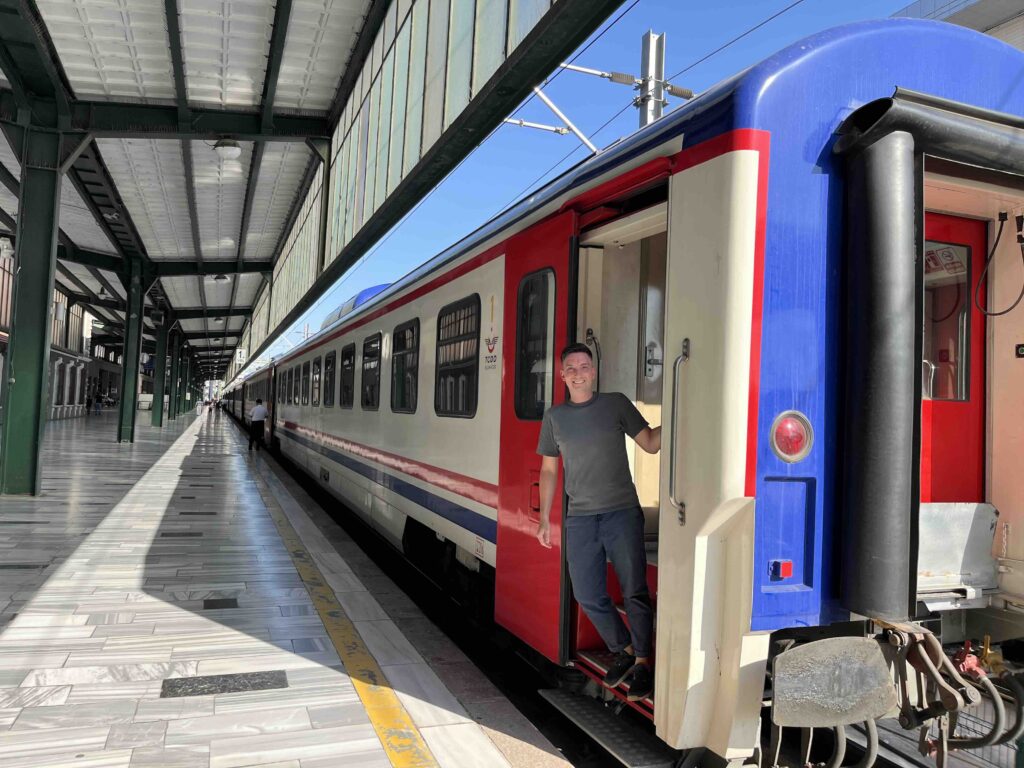
Taking the legendary Dogu Express from Ankara to Kars
The Dogu Express – or Doğu Ekspresi – has become one of Turkey’s most iconic…