
Crossing from Turkey into Georgia marked a quiet but meaningful shift in my overland journey east. After exploring the remote ruins of Ani near the Armenian border, I continued north into Georgia — a country known for its ancient culture, dramatic landscapes, and warm hospitality. Over the next few days, I wandered through the streets of Tbilisi, Georgia’s vibrant capital, before heading deep into the Caucasus Mountains on a day trip to Kazbegi. What followed was a mix of logistical challenges, atmospheric city walks, and some of the most impressive mountain scenery I’ve seen so far.
3 Quick Facts About Visiting Georgia
- Georgia is very affordable for independent travelers. From accommodation and food to public transport and day tours, Georgia offers excellent value for money. It’s an ideal destination for slow travel, overland journeys, and longer stays without breaking the budget.
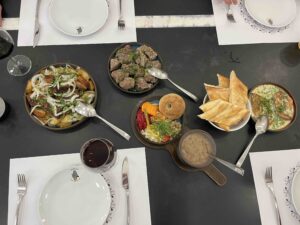
- Georgia has a remarkable and ancient wine culture. Try Georgian wine that is traditionally made by fermenting and aging grapes in large, egg-shaped clay vessels called qvevri, which are buried underground.
- Taking any kind of medication into the country is strictly prohibited (they do checks!).
From Kars, Turkey to Georgia – A Quick Throwback
I arrived in Kars the day before after visiting the ghost city of Ani, one of the most fascinating archaeological sites in eastern Turkey. Staying in Kars turned out to be a great base — not only for Ani, but also for continuing my journey toward Georgia.
Unlike major border crossings elsewhere, getting from Kars to Tbilisi isn’t straightforward. There is no direct public transport connecting the two cities, which makes this stretch feel like a small overland adventure in itself.
How to Get from Kars to Tbilisi (Overland Route Explained)
If you’re planning to travel overland from Kars, Turkey into Georgia, here’s the reality:
- There is no public bus or train directly to the border
- You’ll need a combination of private transport, hitchhiking, or taxis, followed by local buses on the Georgian side
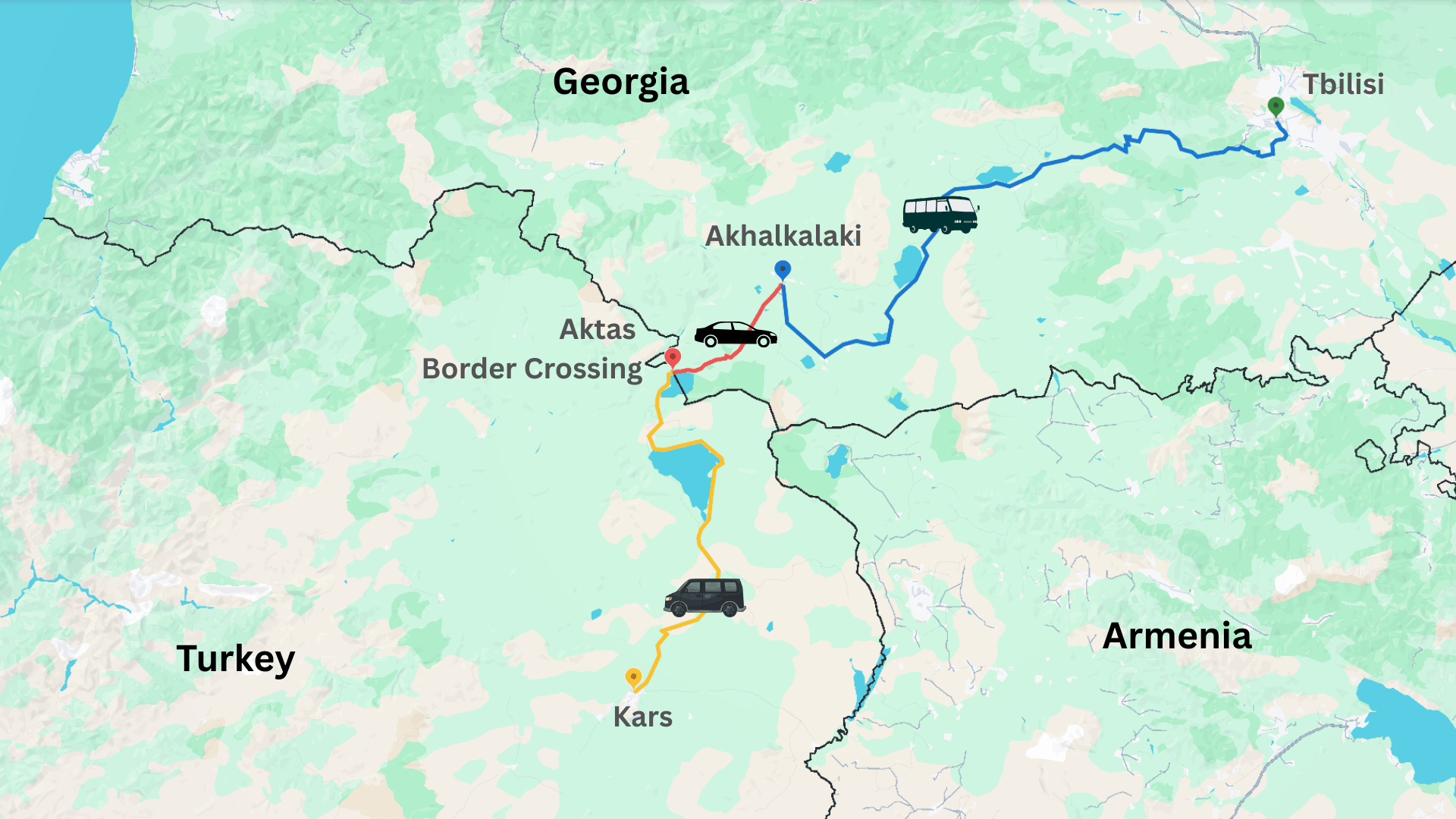
My Route Step by Step
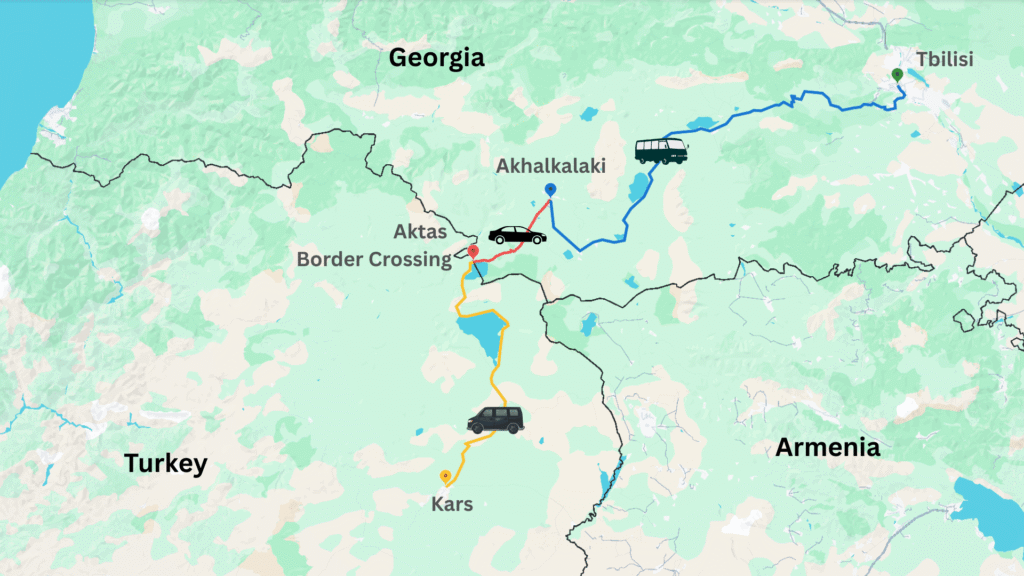
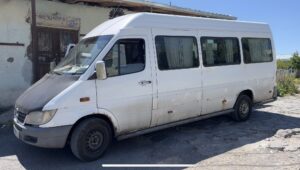
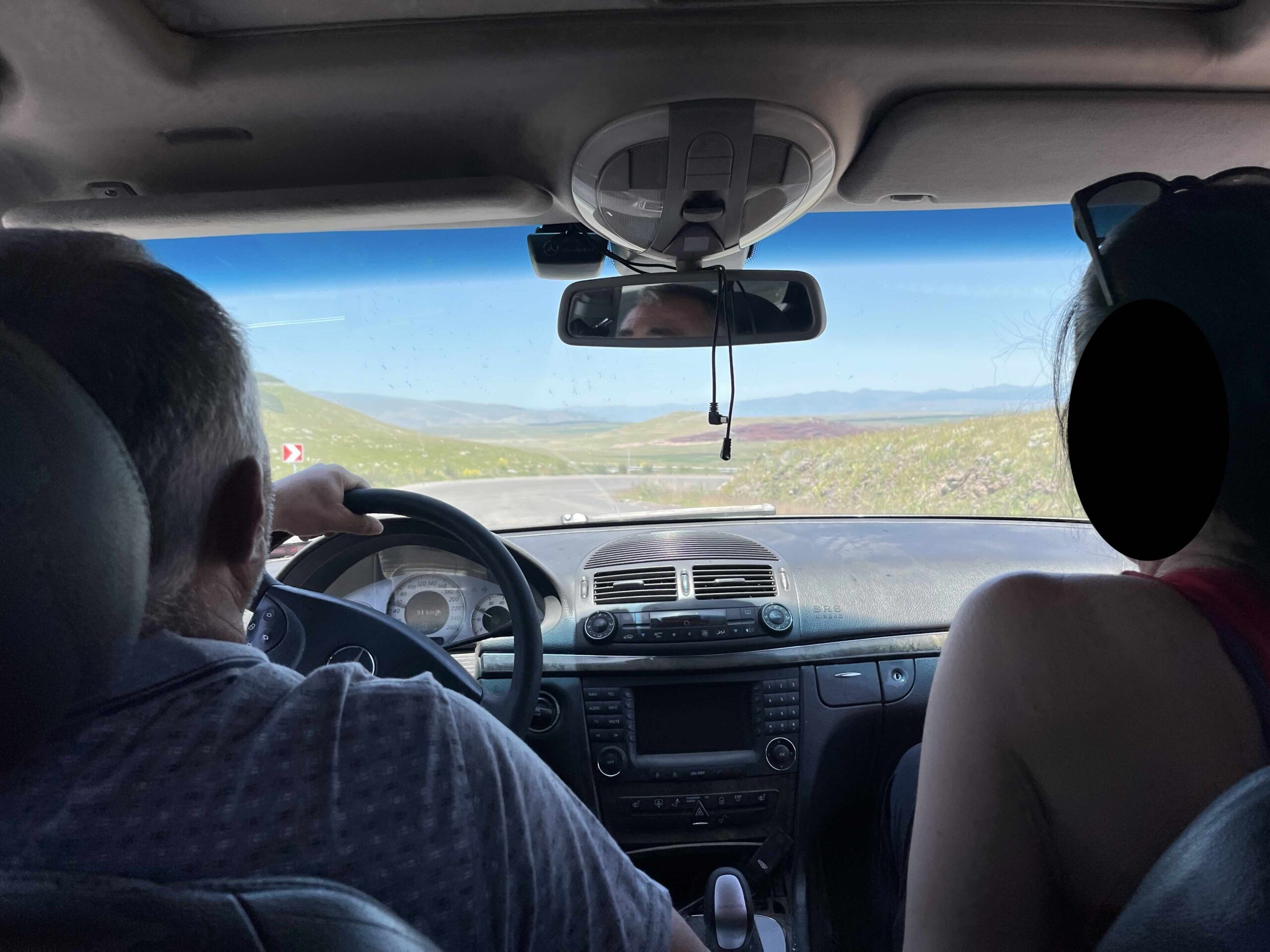
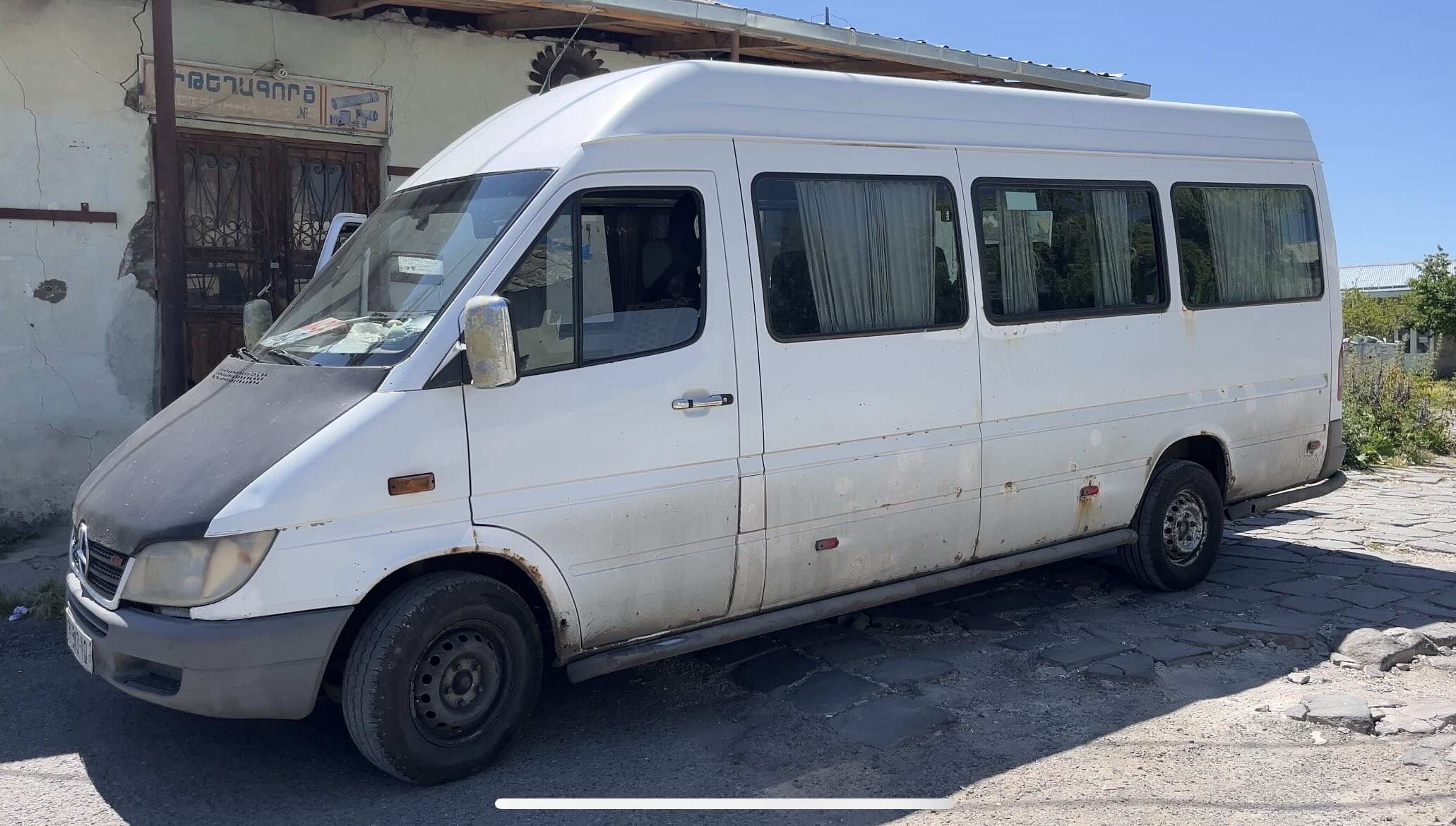
- Kars → Aktas Border Crossing (Turkey) I was lucky: the same local driver who had taken me to Ani offered to drive me — along with two American travelers — directly from Kars to the Aktas border crossing.
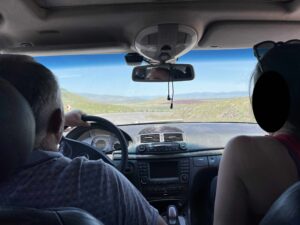
- Border Crossing → Akhalkalaki (Georgia) After clearing immigration, a local Georgian driver (organized informally) picked us up on the other side. Friendly guy — but easily the wildest driving experience of the trip so far. Massive potholes, high speed, sudden braking… a true Caucasus initiation.
- Akhalkalaki → Tbilisi (Public Bus) From a small town near the border, I boarded a public bus for the final stretch to Tbilisi. After the previous ride, I didn’t take any chances — motion sickness tablet included.
The Turkish-Georgian Border Crossing Akhalkalaki
There were a few trucks waiting but there were no other pedestrians who wanted to cross the border. We did not have to wait at all and clearing the immigration on the Turkish side was done in a minute.
IMPORTANT: Do not bring any kind of medication into Georgia. Nothing. If you need medications due to a health condition you need proof.
After a short walk through the building we reached the Georgian immigration. First all our luggage was scanned in an x-ray machine followed by a manual search by the border officers. Every backpack and suitcase was opened and thoroughly searched by hand. What they are looking for? Medication. Georgia does not allow any kind of medication, not even simple pills against headache.
First Impressions: Exploring Tbilisi
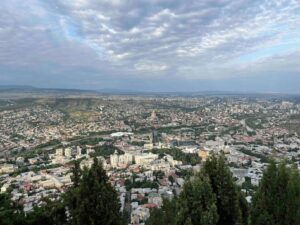
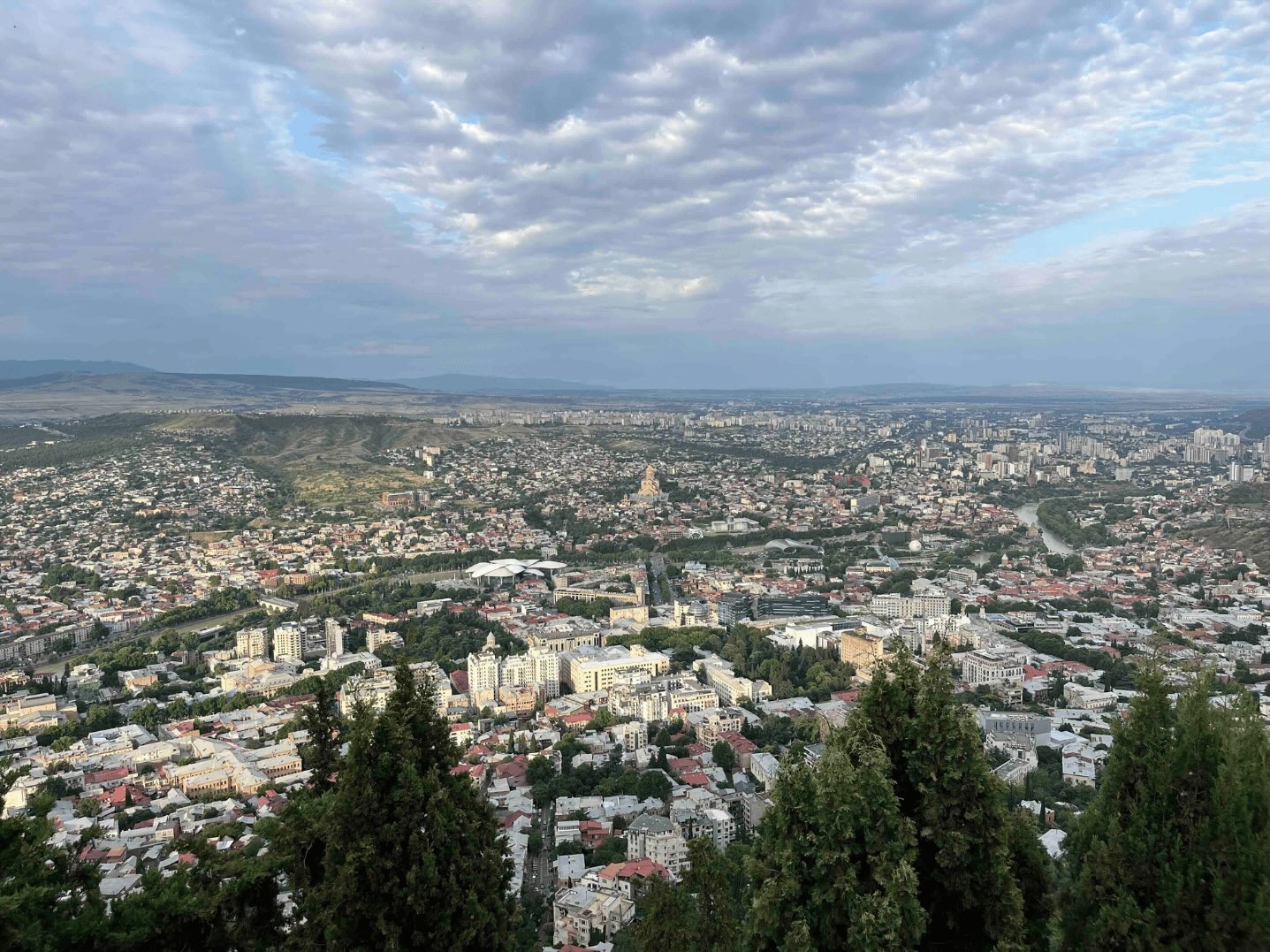
I spent two full days exploring Tbilisi, mostly on foot. The city instantly felt welcoming — a mix of old-world charm and modern design, with a relaxed pace that invites wandering.
Bridge of Peace & Rike Park
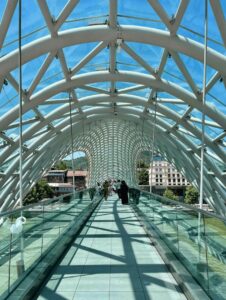
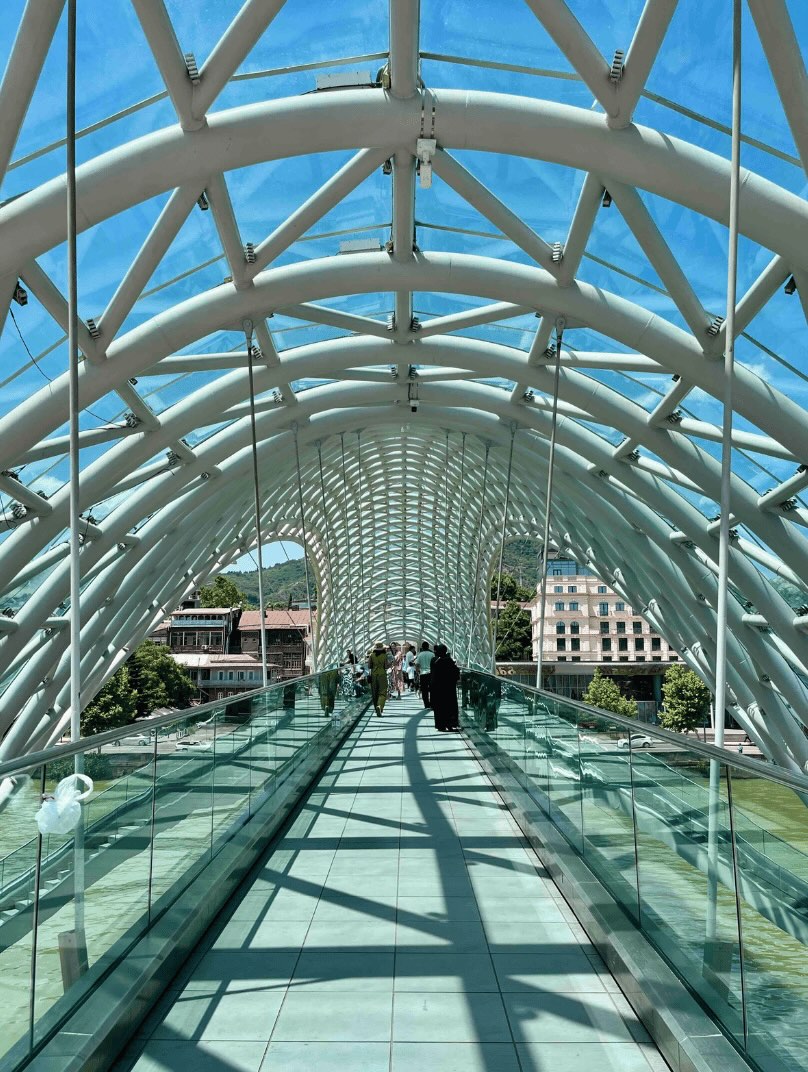
I started my exploration at the Bridge of Peace, a modern steel-and-glass pedestrian bridge spanning the Kura River. Designed by an Italian architect and opened in 2010, it’s a bold contrast to the historic surroundings.
Right next to it lies Rike Park, a surprisingly peaceful green space — and home to the cable car station that takes you up to Narikala Fortress.
Tbilisi Old Town & Clocktower
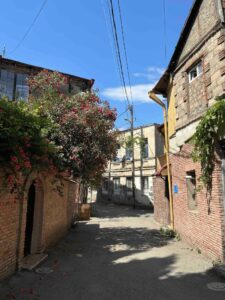
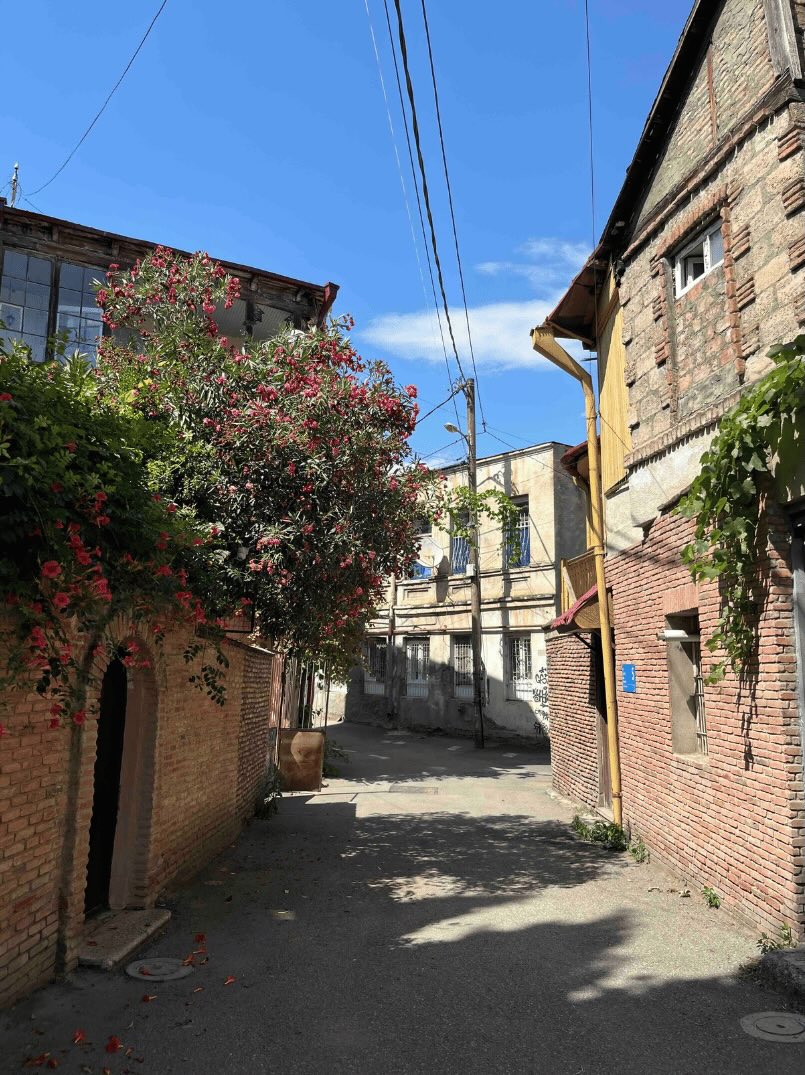
Wandering through Tbilisi’s Old Town was one of my favorite experiences:
- cobblestone streets
- colorful balconies
- wine bars tucked into historic buildings
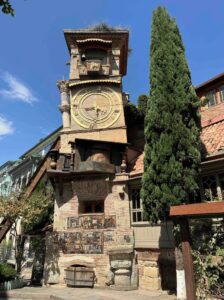
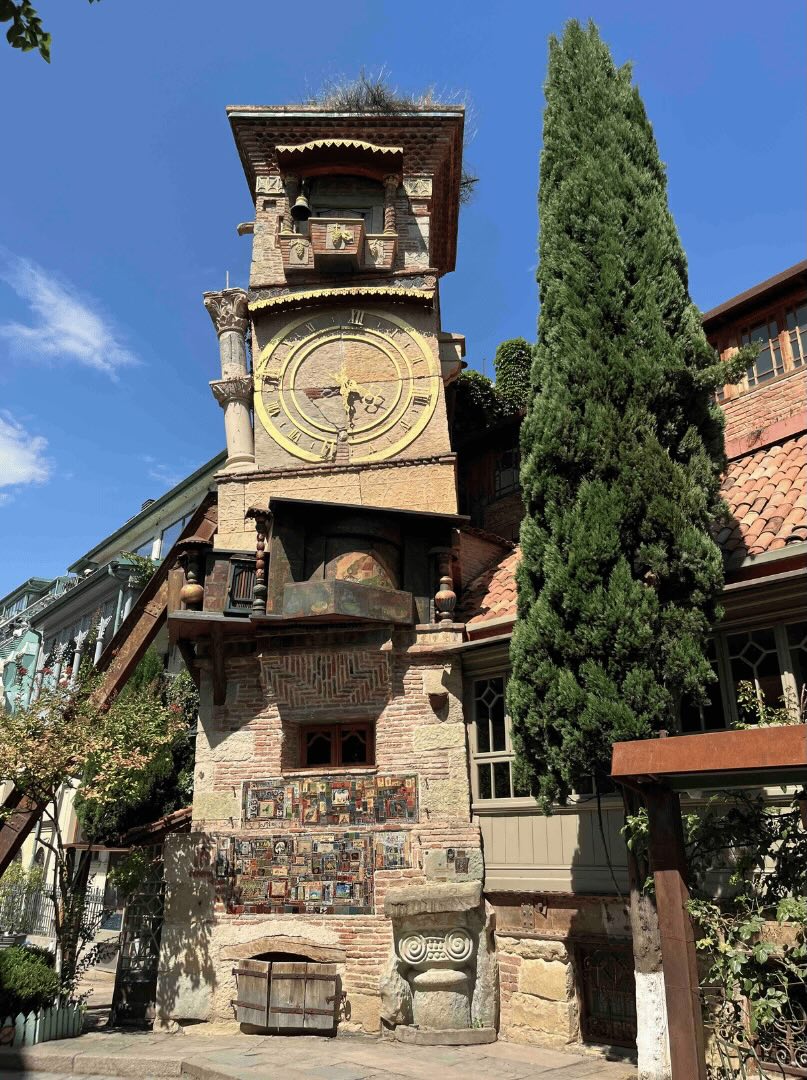
I also passed the quirky Rezo Gabriadze Clocktower, leaning slightly and chiming every hour — playful, artistic, and unmistakably Tbilisi.
Cable Car to Narikala Fortress
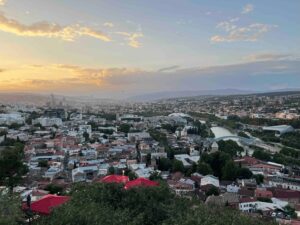
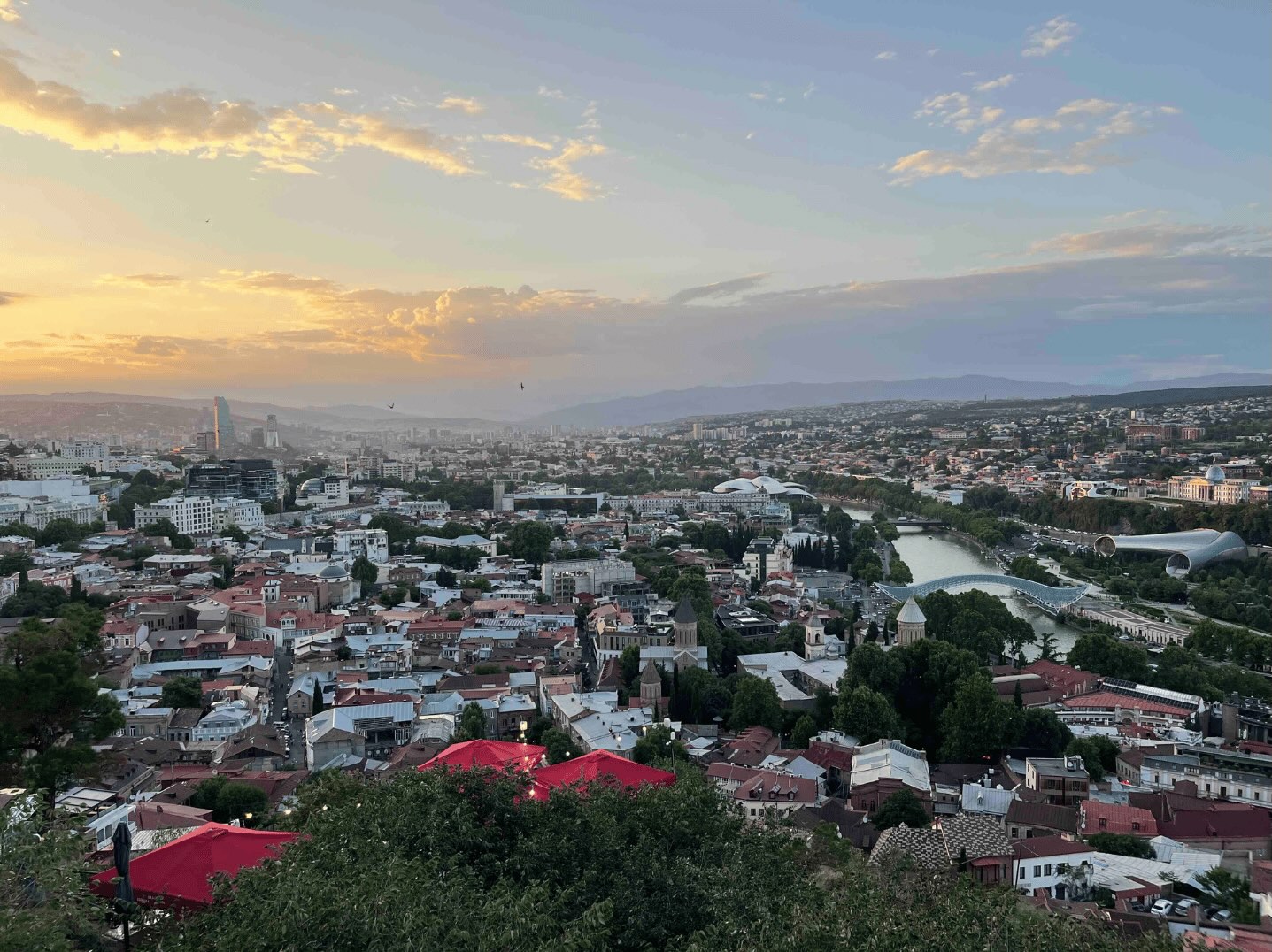
In the evening, I took the cable car from Rike Park up to the hill where you can find the Mother of Georgia and Narikala Fortress . To ride it, you’ll need a MetroMoney card, which is used for parts of Tbilisi’s public transport. The price? 2.5 GEL one way — less than 1 euro.
At sunset, the views over the city were spectacular: rooftops glowing, the river winding through the city, and mountains framing it all.
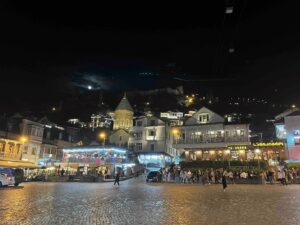
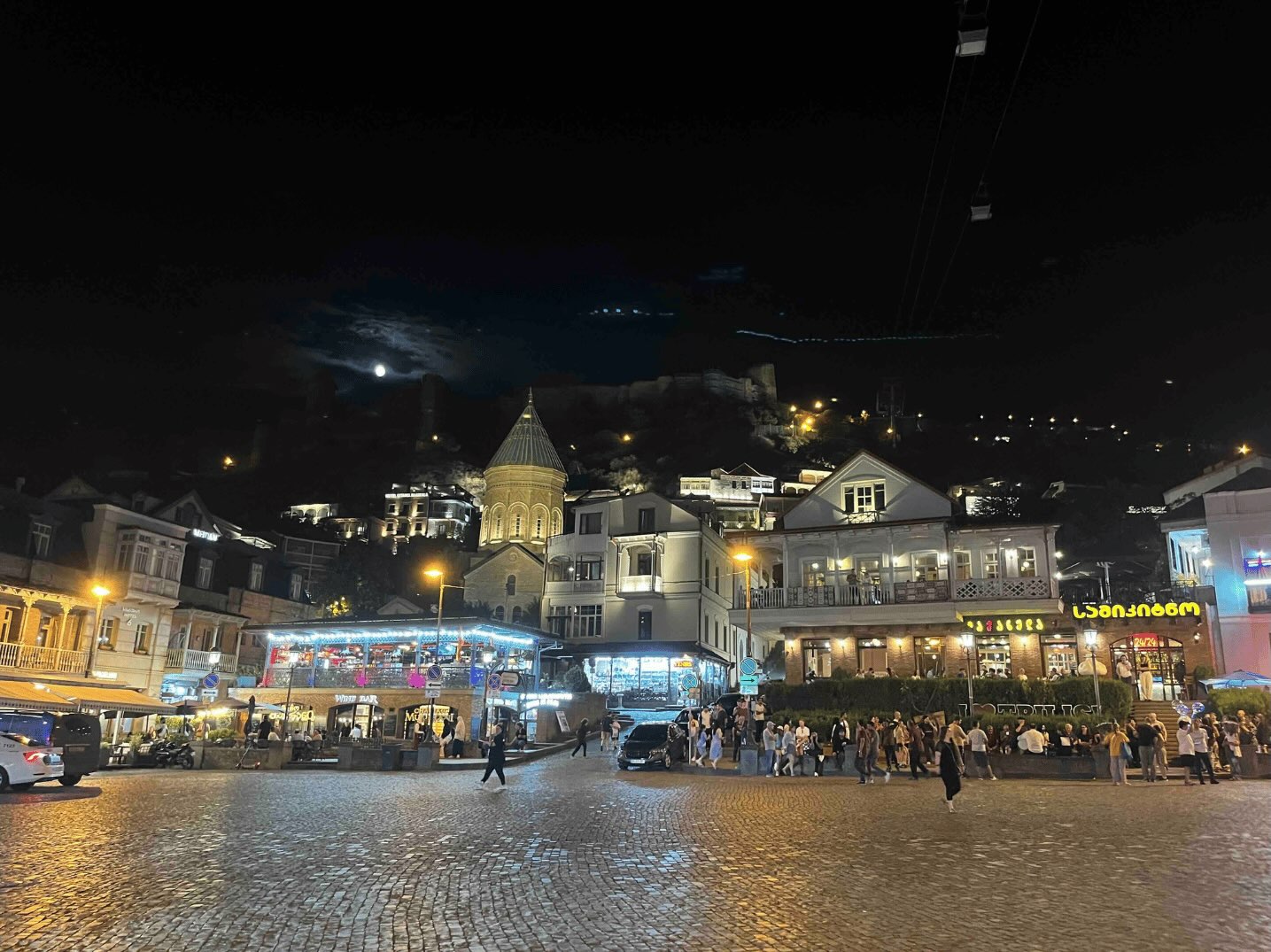
Tbilisi at Night
After dark, Tbilisi completely changes its mood. Warm lights, quiet streets, people strolling with no rush. It’s one of those cities that feels especially alive at night — perfect for an unplanned evening walk.
Day Trip to Kazbegi: Into the Caucasus Mountains
On my third day, I joined a group day trip to Kazbegi, heading north along the Georgian Military Highway. Of course, the weather had other plans.
After two perfect sunny days in Tbilisi, it started raining the moment we left the city. Fog, drizzle, and low clouds followed us into the mountains — but instead of disappointment, it added a mystical atmosphere to the entire journey.
Zhinvali Reservoir Viewpoint
Our first stop was the Zhinvali Reservoir, famous for its turquoise water. Fog covered most of the view, but it gave the place an eerie, almost cinematic feeling. There were small souvenir stalls nearby — and a few photo attractions — though the rain kept things quiet.
Ananuri Fortress
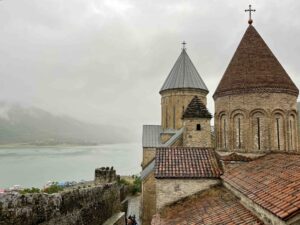
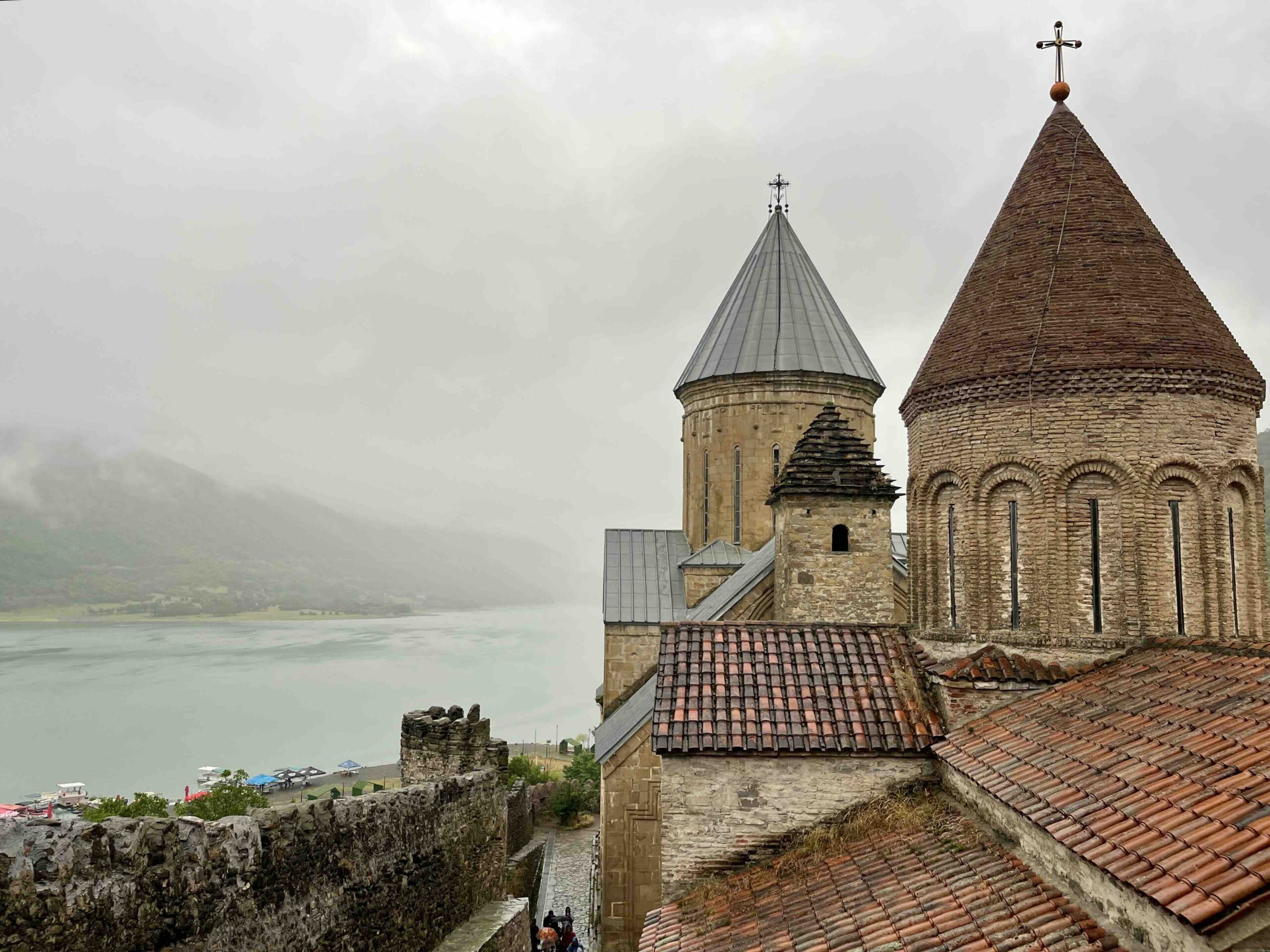
Next, we explored the Ananuri Fortress, built mainly in the 17th century and once the scene of many battles. The fortress sits directly above the reservoir and feels incredibly dramatic, especially in wet weather.
Stone paths were slippery, but that didn’t stop visitors from climbing all over the complex — cautiously and sometimes not so cautiously.
Russian–Georgian Friendship Monument (Gudauri)
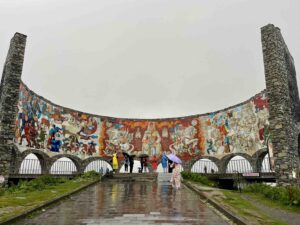
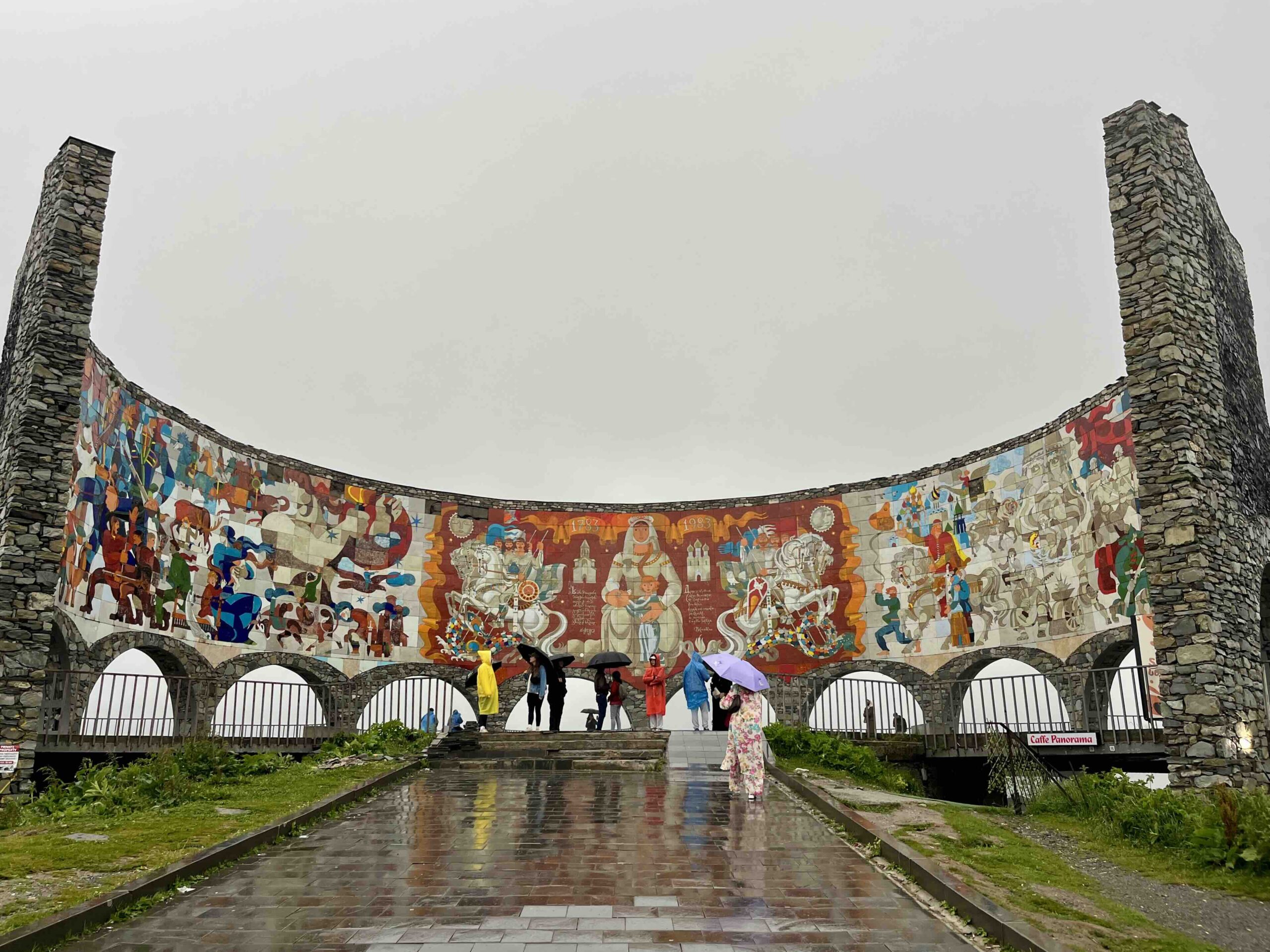
After about an hour’s drive, we reached the Russian–Georgian Friendship Monument near Gudauri. Built in 1983, it commemorates a historic treaty between Georgia and Russia.
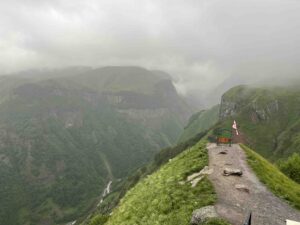
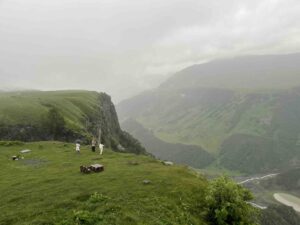
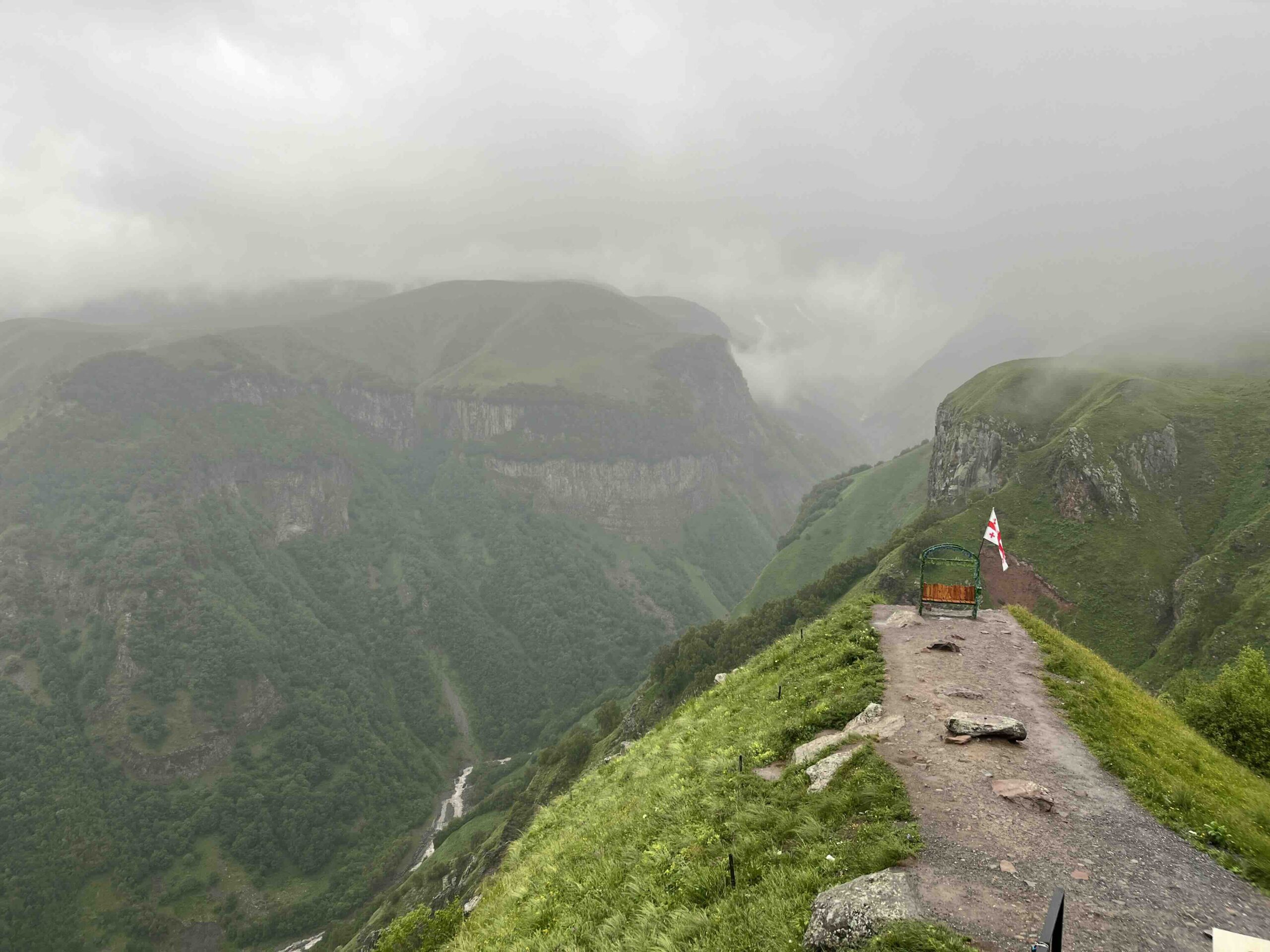
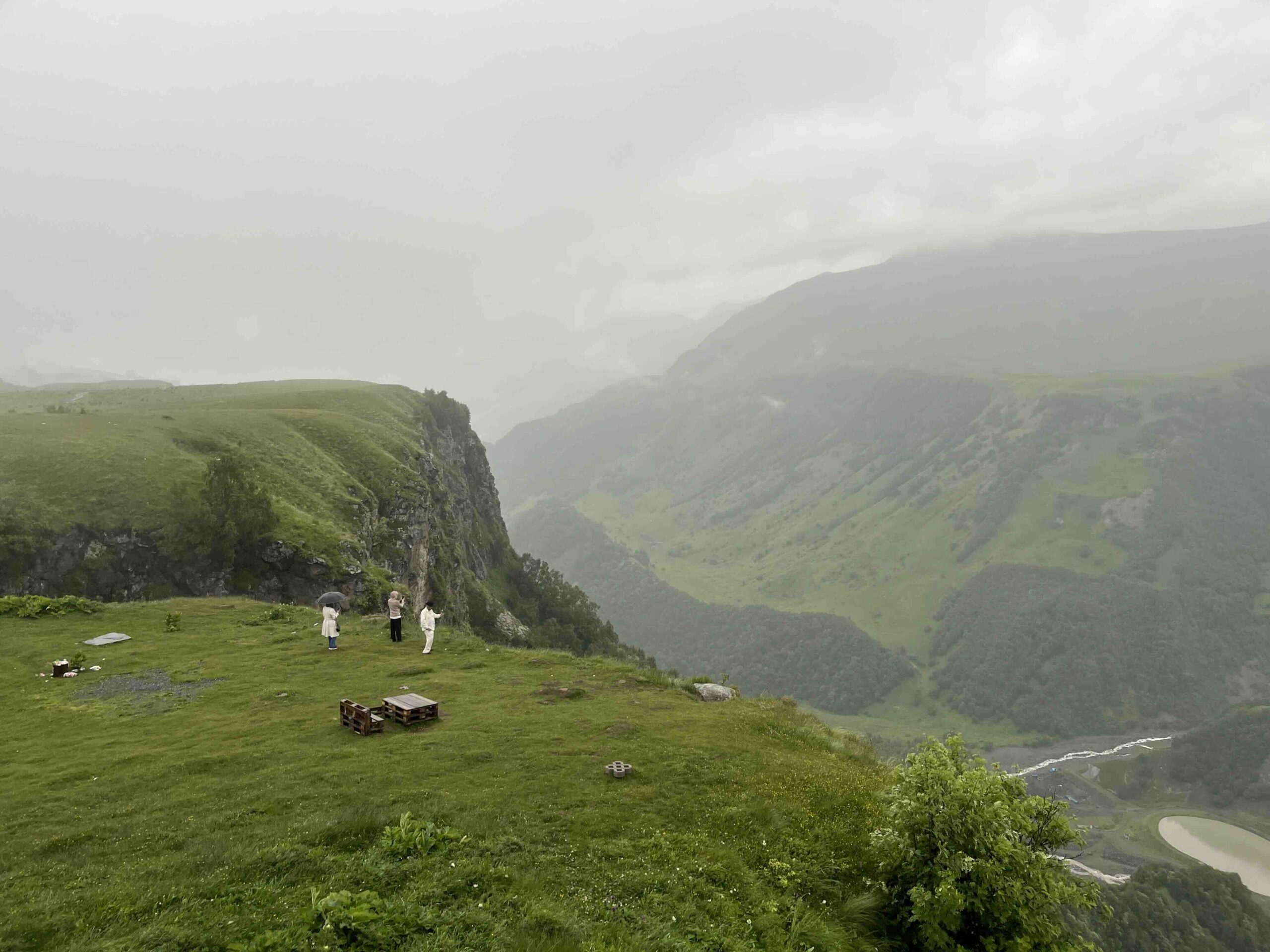
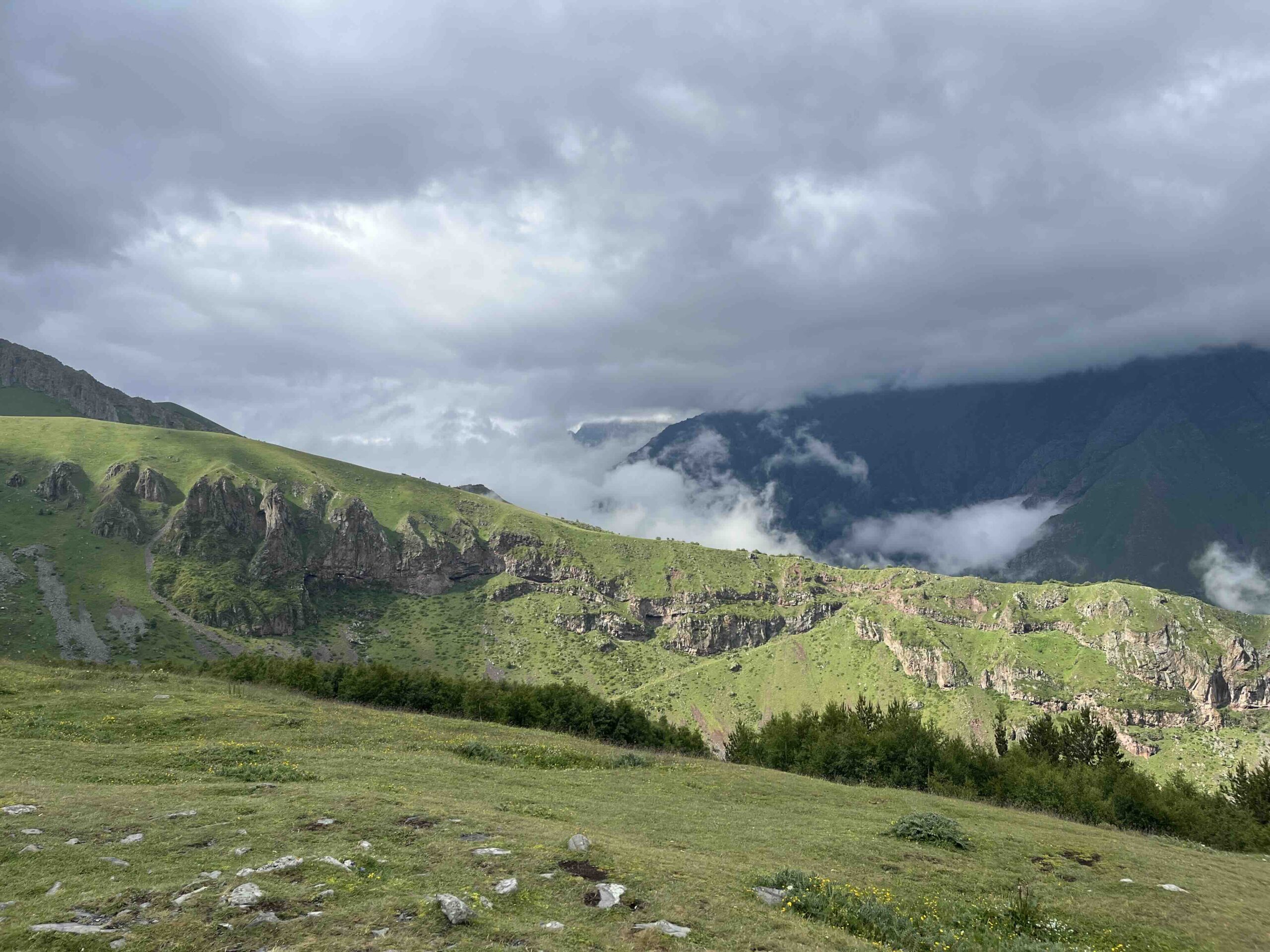
Behind it lies the Gudauri Viewpoint, and luckily the fog lifted just enough to reveal vast mountain valleys stretching into the distance. Easily one of the most impressive views of the day.
As we continued north, trucks lined up endlessly along the road — already waiting to cross the Russian border, still 20 kilometers away.
Gergeti Trinity Church – The Highlight
Our final stop was the most iconic of all:
Gergeti Trinity Church, sitting at 2,170 meters elevation beneath Mount Kazbek.
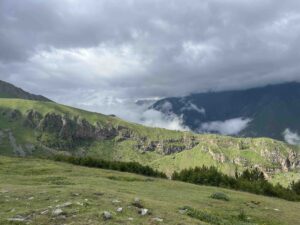
Because of the steep road, we switched to 4-wheel-drive vehicles for the final ascent. Wind, cold air, and clouds surrounded us — but the views were absolutely stunning.
Built in the 14th century by an unknown architect, the church’s isolated location has made it one of Georgia’s most powerful symbols. Standing there, surrounded by mountains in every direction, it was easy to understand why.
Final Thoughts
Crossing from Turkey into Georgia felt like entering a new chapter of the journey — culturally, geographically, and emotionally.
From the logistical challenges of the border crossing, to quiet walks through Tbilisi, to misty mountain roads and ancient churches, these few days offered constant contrast.
Georgia surprised me in the best possible way — and this was only the beginning.
Berlin to Singapore Overland
📍 Kars to Tbilisi
🚅 Transportation: 2 cars; 1 bus
💻 Booked via: tour guide in Kars
🛣️ Distance travelled since Berlin: 3,780 km